How to Speak for a Small Country in Model UN and Build Influence Without Power
How a delegate assigned a small country in MUN can build influence through niche issue ownership, coalition pivot positioning, and speaking strategies that turn low expectations into chair attention.
How to Speak for a Small Country in MUN and Build Influence Without Power
You drew Tuvalu. You drew Chad. Your nation has no veto, no standing army anyone fears, and an embassy budget that could not rent a single committee room in the UN building. The representative next to you has China. The one across the room has the United States. If you believe the game is decided by geopolitical weight, you have already lost. Speaking for a small country in MUN is not a handicap you overcome. It is a structural advantage you exploit. A participant with nothing to defend and nothing to threaten can move faster, speak earlier, and claim a moral stance that no P5 representative can touch.
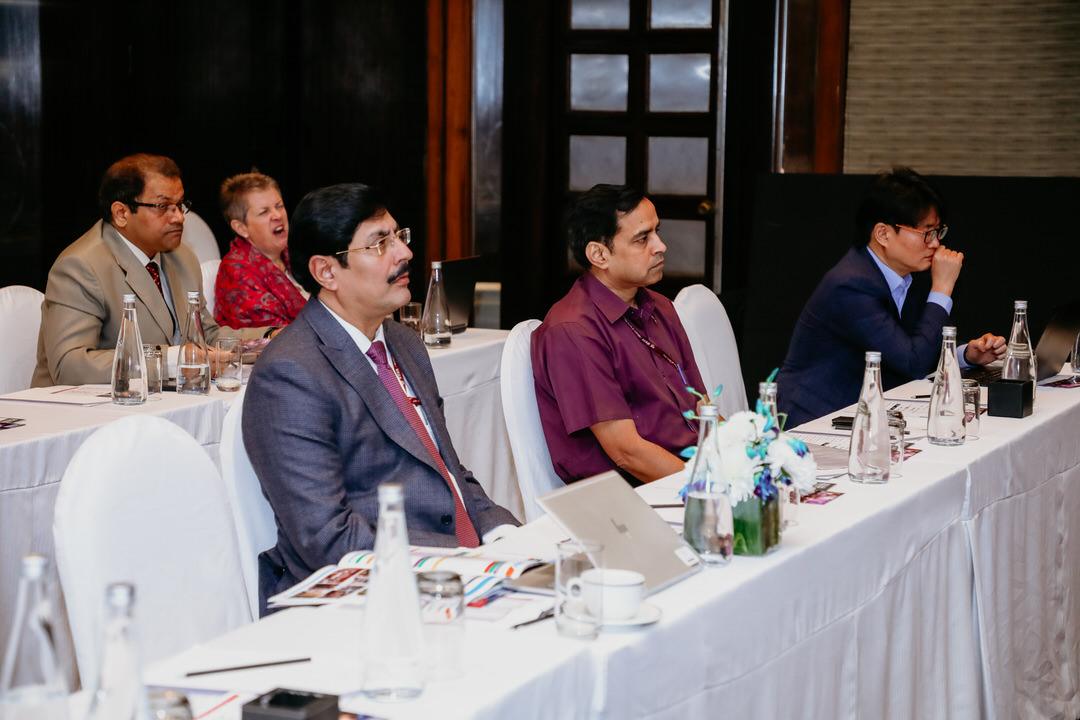
.jpg)
MUN Small Country Strategy: Why The Weakest Assignment Is The Best One
The fundamental error is treating Model UN as a simulation of power politics. It is not. It is a debate sport with diplomatic theatre, run under artificial time pressure, judged by chairs who look for procedural fluency, coalition skill, and faithful representation of your assigned nation's policy. They do not care whether your country would actually win a negotiation in New York. On that rubric, a small-country participant who does the research and works the room beats a P5 delegate who reads a generic opening speech and disappears into a bloc. The chair sees the gap. Award rubrics at Harvard-style conferences explicitly weight 'representation of assigned country's policy' above 'representation of a powerful country's policy.' That rule makes small states winnable.
MUN Small State Influence: Five Assets You Hold That A P5 Delegate Does Not
You Defy Expectations
Nobody expects you to lead. When a small-nation representative stands in the first moderated caucus and delivers a substantive speech on the issue, the chair notices. The delegate from China is supposed to speak. You are not. The deviation from expectation earns attention, and attention is the currency that converts into chair rapport.
You Own The Issue
If your country is a Small Island Developing State (SIDS), a term for low-lying coastal nations vulnerable to climate shocks, and the topic touches climate adaptation, you are not participating in the debate. You own it. The script writes itself: 'As a small island developing state facing existential risk from sea-level rise, our delegation brings a perspective this committee cannot afford to ignore.' That line lands. The representative from the United States cannot deliver it credibly. You can.
You Bridge Blocs
Large blocs like the G77, the Arab Group, or the African Group need a non-threatening partner to bridge stances. A small nation can move between blocs without triggering suspicion. The delegate from Indonesia cannot do that. You can. Find the gap between two blocs' draft texts and offer a solution that pulls them together, with your country's name on the document as a sponsor.
You Command A Swing Vote
In a committee with 40 members, the difference between a resolution passing and failing is often three or four votes. A small bloc of five minor nations, voting together, decides outcomes. That is power that has nothing to do with military spending. Organise it in the first unmoderated caucus: identify the other small states, propose a voting pact, and trade your collective support for authorship slots and policy concessions.
You Face Zero Scrutiny
Nobody fact-checks the delegate from Burkina Faso. Nobody knows what Burkina Faso's stance on digital trade actually is. That gives you room to define your nation's policy in committee, provided you ground it in the CIA World Factbook and the country's UN mission statements. A P5 representative who misstates a policy gets caught. You can shape the room's perception of your state from the first speech.
How To Win Awards With A Small Country MUN Assignment
Winning requires a deliberate three-phase strategy that starts before the committee gavels in.
Phase one: the pre-conference research pivot. Do not write a generic position paper that summarises the topic. Write a paper that makes your nation's specific constraints the center of the analysis. For a Least Developed Country (LDC), defined by the UN as a low-income nation facing structural obstacles to growth, on a development finance topic, your paper should argue that debt relief and grant-based financing are non-negotiable preconditions for any action. That is defensible policy. It is also a negotiating stance that forces richer countries to accommodate you or look unreasonable. Position paper judges at NMUN and Harvard-style conferences reward that specificity.
Phase two: the first-session opener. Arrive having identified your policy niche, the sub-topic where your nation has the strongest claim to speak. In the opening speakers' list, be among the first ten to speak. Use the SIDS script above or a direct equivalent. Then in the first moderated caucus, motion to set the sub-topic to your niche. If the chair recognises your motion, you control the agenda for the next twenty minutes of speaking time.
Phase three: bloc entry and resolution sponsorship. During the first unmoderated caucus, approach the bloc most aligned with your country's policy, probably the G77 or a regional group. Offer to draft the operative clauses on your niche issue. Do not ask for anything in return immediately. Once your language is in the draft text, your delegation is a sponsor, and sponsors are visible during voting. From that spot, pivot to swing-vote negotiation: 'Our bloc controls five votes. We will support your resolution on clause X if you include our language on clause Y.'
MUN Underdog Delegation Tactics: The Specific Moves That Win Committees
When to use a procedural motion. Your strongest procedural weapon is the motion to set speaking time. If the committee is moving too fast and you need time to build your bloc, motion for a longer speaking time, 45 or 60 seconds, to slow the pace. If you have already built your bloc and want to force a vote before the large blocs consolidate, motion for a shorter time, 20 seconds, to compress debate. Chairs notice which participants understand procedure as a strategic tool.
How to use an amendment strategy. In Harvard-style procedure, the best small-country move is the friendly amendment that becomes unfriendly. Draft an amendment to the dominant resolution that inserts your nation's policy language. Offer it as friendly to the sponsors. If they accept, your policy is in the final text. If they reject, take the floor and explain why the amendment is necessary, then force a vote. A well-defended amendment from a minor state that fails by a narrow margin still earns credibility with the chair.
The consensus blocker move. In THIMUN procedure, where the goal is a single resolution passed by acclamation, a small nation that refuses to merge its working paper into the majority text becomes a consensus blocker. This is risky. You can be isolated and blamed for producing no output. But if you have a real policy objection, hold the line and force the majority to negotiate. The chair will mediate. Your policy gets into the final text. Use this once per committee. Repeated blocking destroys goodwill.
How to earn chair attention without dominating speaking time. Submit a written working paper early. In Harvard-style, the chair reads the first three working papers. A one-page draft with your country's name at the top, circulated within the first two unmoderated caucuses, positions you as an initiator. The chair notes who is driving the committee forward. That note shows up in award deliberation.
Common Questions
What should I do if my small country has no clear policy position on the topic?
Define one from the nation's development profile, its UN voting record, and its regional alignment. If you are a Least Developed Country, your policy is that international action must include capacity building and financial assistance. That is defensible. Never say 'our country has no position' in committee.
How do I recover if I am isolated from all blocs after the first unmoderated caucus?
Approach the chair during a break and explain your country's stance honestly. Ask for procedural guidance. Chairs sometimes direct isolated representatives toward blocs that need votes. Failing that, start a new bloc around a niche issue, the sub-topic no one else has claimed. Even a two-person bloc can attract merger offers.
Can I win a Best Delegate award with a small country in a large General Assembly?
Yes, but it is harder. In a 60-person GA, the chair's attention is diluted. Speak in every moderated caucus, submit at least one working paper, co-author a resolution, and deliver a closing speech that ties your nation's perspective to the committee's output. The smaller the committee, the better your odds.
Is it worth requesting a small country assignment deliberately?
Yes, if you are an experienced delegate. Small countries give you maximum flexibility to define your role and maximum credit for performing well. Novices should request a medium-power state like Brazil or South Africa to learn coalition dynamics without the pressure of invisibility. A first-time participant with Tuvalu often sinks.
Read next
-
 MUN Speaking and Negotiation: Scripts and Practice Steps for Every Speech Type
The hub for MUN speaking and negotiation guides, routing delegates by what they need to do and linking to concrete scripts and practice steps for every speech type.
MUN Speaking and Negotiation: Scripts and Practice Steps for Every Speech Type
The hub for MUN speaking and negotiation guides, routing delegates by what they need to do and linking to concrete scripts and practice steps for every speech type.
-
 THIMUN Procedure vs Harvard Parliamentary Procedure: What a Delegate Does Differently
A delegate-facing comparison of THIMUN and Harvard parliamentary procedure, covering speaking, document-building, and coalition-forming differences.
THIMUN Procedure vs Harvard Parliamentary Procedure: What a Delegate Does Differently
A delegate-facing comparison of THIMUN and Harvard parliamentary procedure, covering speaking, document-building, and coalition-forming differences.
-
 HMUN vs HNMUN: The Difference Between Harvard's Two MUN Conferences
HMUN is Harvard's high school MUN conference in Boston; HNMUN is its university-level counterpart. Applying to the wrong one wastes an application cycle.
HMUN vs HNMUN: The Difference Between Harvard's Two MUN Conferences
HMUN is Harvard's high school MUN conference in Boston; HNMUN is its university-level counterpart. Applying to the wrong one wastes an application cycle.
-
 LIMUN vs OxIMUN: Comparing the UK's Two Largest University MUN Conferences
LIMUN and OxIMUN are the UK's two largest university MUN conferences. The practical difference is the admission route for a delegate without a society.
LIMUN vs OxIMUN: Comparing the UK's Two Largest University MUN Conferences
LIMUN and OxIMUN are the UK's two largest university MUN conferences. The practical difference is the admission route for a delegate without a society.
-
 Best MUN Conferences for a First Conference, Ranked on Survivability
MUN conferences ranked on what makes them survivable for a first-time delegate—beginner committees, published rules, and realistic applications—not on prestige.
Best MUN Conferences for a First Conference, Ranked on Survivability
MUN conferences ranked on what makes them survivable for a first-time delegate—beginner committees, published rules, and realistic applications—not on prestige.