Model United Nations Committee Types and How Their Simulations Differ from the Real UN
An overview of MUN committee types routing readers to detailed guides that explain what each committee does in the real UN and how its simulation differs.
Your First MUN Committee Is A Bet On The Wrong Format
New delegates choose a committee by its topic and realise too late that the procedure, not the agenda, determines whether they thrive. The real question is not what you want to debate but how you want to debate it. Every major MUN committee type is mapped here by the body it mirrors in the real UN and, more importantly, by what happens in the room when the gavel drops. Every guide in this section follows the same contract: describe what the committee does in the real UN, then explain how the MUN version departs from it in practice. You are here because you need to pick a lane, not because you need a second opinion on the UN Charter.
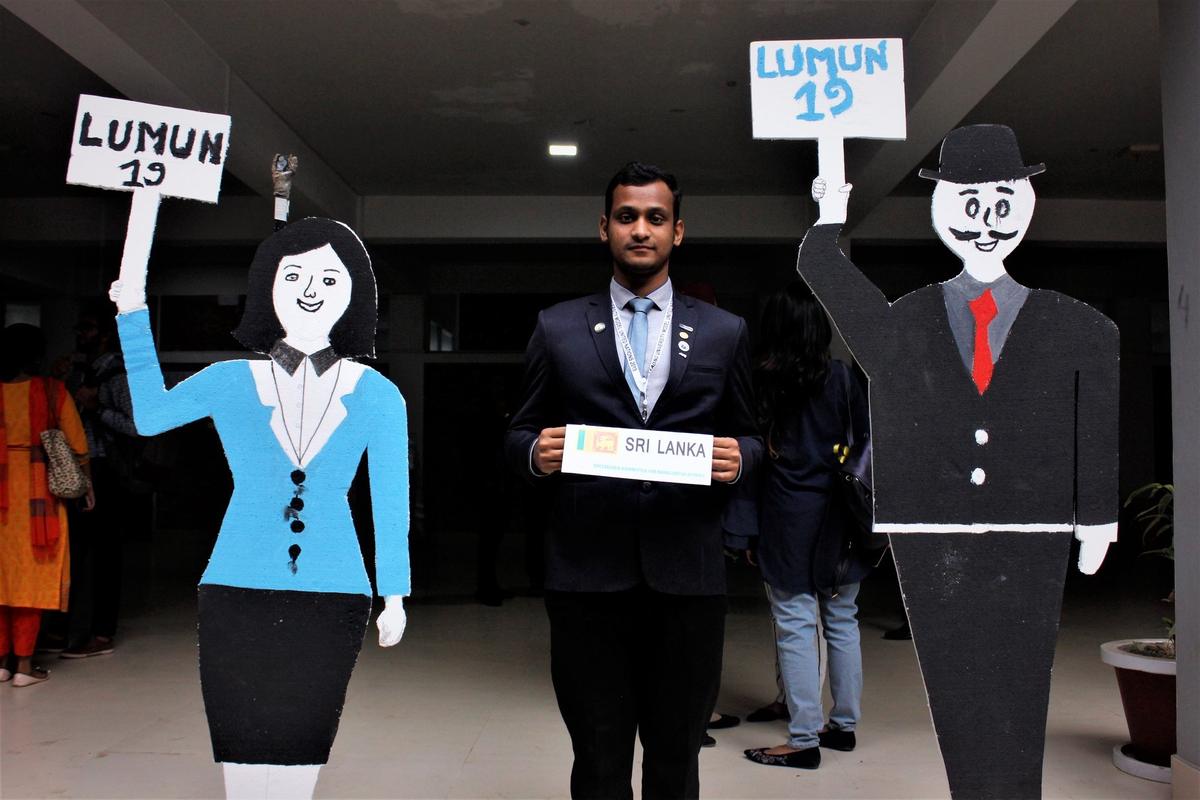

- Fundamental Procedural Divide: THIMUN procedure (single merged resolution after lobbying) dominates secondary-school conferences in Europe, Middle East, and Asia. Harvard procedure (competing resolutions, caucus-based debate) dominates university-level conferences in North America. NMUN procedure is a third variant used at university level in North America and some international sites.
- Four Committee Families: General Assembly, Specialised Agency, Crisis Committee, Historical Committee. Each mirrors a different UN or fictional body, with distinct rules, participant roles, and award criteria. The committee's real-world mandate matters less than how the exercise changes that mandate.
- What Determines Your Experience: Committee size, participant-to-chair ratio, resolution output model (single vs. multiple), position paper weight in awards, crisis update frequency, and pre-conference preparation expectation. These vary more between conferences of the same type than between committee types at the same conference.
- Awards Reality: Published rubrics claim objective scoring. In practice, awards heavily weight floor presence and chair rapport. The gap between stated criteria and actual outcomes is wide enough that experienced participants coach newcomers to prioritise speaking time over research quality.
MUN Committee Types Explained: The Real Difference Is Procedure, Not Topic
Every MUN committee mirrors a real UN body or a fictional counterpart, but the exercise departs from the real thing in ways that matter far more than the committee's mandate. A General Assembly committee in Harvard procedure feels nothing like a General Assembly committee in THIMUN procedure, even when both mirror the same UN body. The reason is that MUN is a competitive debate sport with diplomatic theatre, not a faithful reproduction of international diplomacy. The thing newcomers most often get wrong is treating it as a test of geopolitical knowledge when it is primarily a test of procedure, public speaking, and coalition-building under artificial time pressure.
The four committee families are General Assembly, Specialised Agency, Crisis Committee, and Historical Committee. Each exists across both THIMUN and Harvard procedural systems, and each has its own failure modes. Your choice should be based on what you are trying to do: choose your first committee, understand what a crisis committee actually demands, or decide between a General Assembly and a Specialised Agency.
MUN Committee Categories Guide: The Four Families And How To Route Yourself
This guide organises the four families by what they demand from a participant, not by what they simulate. Read the section that matches your goal.
General Assembly vs Specialised Agency MUN: Which Tests Coalition-Building And Which Tests Expertise
A General Assembly committee mirrors one of the six UNGA main committees: DISEC (disarmament), SOCHUM (social, humanitarian, cultural), SPECPOL (special political and decolonisation), and others. These are large committees, typically 60 to several hundred participants, where the real UN produces recommendatory resolutions that carry political weight but no binding force. In MUN, the exercise differs in two critical ways. First, the committee size means individual speaking time is scarce. A participant in a large GA may speak for ninety seconds total across a weekend. Success depends on bloc formation during unmoderated caucuses and resolution sponsorship, not on floor speeches. Second, the resolutions are binding in the exercise only if the conference rules specify it, which most do not. The real UN's Security Council is where binding resolutions happen, and that is a different committee type.
A Specialised Agency mirrors a specific UN body with a focused mandate: WHO, UNESCO, IAEA, or ECOSOC itself. These committees are smaller, typically 20 to 50 participants, and the exercise stays closer to the agency's real function. A WHO committee writes resolutions on pandemic response or health system financing. A UNESCO committee covers education and cultural heritage. The difference from the real body is that in MUN, the agency's limited mandate is both a strength and a trap. It forces deep research on a narrow topic, which rewards those who read the delegate pack study guide and supplement it with primary sources. It also means a participant who arrives without specific knowledge of the agency's recent work will produce a position indistinguishable from every other person who relied on the study guide alone. The failure mode here is study guide dependency: a position that summarises the topic rather than stating the assigned country's policy on the agency's actual agenda.
If you are a first-time participant, start with a Specialised Agency at a conference that uses Harvard procedure. The smaller committee gives you more speaking time, the focused mandate limits the research scope, and the competitive resolution process teaches you how MUN actually works faster than a GA where you might spend two days in a bloc that never produces a resolution. If you are an experienced participant moving from school to university circuit, the General Assembly is where you prove you can build coalitions at scale, which is the skill that wins awards at conferences like HMUN and NMUN.
Crisis Committee MUN Overview: Not A Committee, A Different Game
A Crisis Committee mirrors a cabinet, ad-hoc body, or scenario where participants represent individuals with personal powers rather than states with policy constraints. The real-world analogue is not a UN body but an executive decision-making group: a war cabinet, a corporate board, a royal court. In MUN, the exercise changes everything. The chair runs a pre-written crisis arc with branching paths, updated by crisis staff based on participant actions. Participants issue personal directives (private actions), committee directives (public actions), and press releases. There is a backroom, a separate physical or digital space for negotiation outside the committee room.
The claimed value of crisis committees is improvisation and quick thinking. The real value is that a participant who researches the chair's likely narrative direction performs systematically better than one who treats it as purely reactive. Crisis arcs are pre-written, and chairs at conferences like MUNUC and YMUN have predictable patterns. A participant who reads past crisis updates from the same conference will recognise the chair's style. The failure mode here is crisis directive irrelevance: submitting directives that ignore the arc the chair is running, which results in directives being noted but not integrated into the narrative. A participant who sends ten directives that do not advance the chair's plot loses to one who sends three directives that do.
A crisis committee is not a beginner's committee. It requires procedural fluency in the base rules before you add the crisis layer, and it rewards those who can write quickly and negotiate without floor time. If you have never written a position paper, do not start in crisis. If you have done three or four GA or Specialised Agency committees and want to test whether you can operate under pressure without a country assignment to anchor you, crisis is the next step.
Historical Committee MUN Format: The Exercise That Cannot Fake Research
A Historical Committee recreates a past UN body or event: the 1962 Cuban Missile Crisis Security Council, the 1945 San Francisco Conference, the 1972 Stockholm Conference on the Human Environment. The real UN at that moment is the exercise. The difference from a standard committee is that participants must represent the past position of their assigned country or individual, not the current policy. A participant representing the United States in a 1962 Security Council cannot use modern US foreign policy arguments. The research requirement is higher and the margin for error is lower. A participant who cites a treaty that did not exist yet loses credibility.
The MUN historical format typically uses Harvard procedure with reduced formal speakers list and heavy use of moderated and unmoderated caucus, similar to crisis but without the real-time updates. The failure mode here is over-preparedness rigidity: a participant memorises a past position and cannot adapt when the committee's debate direction diverges from their prepared material. The chair expects the participant to know the past but also to negotiate within the constraints of that moment. A participant who refuses to compromise because the real country never compromised has misunderstood the assignment. The exercise tests whether you can honour the record while still producing a resolution, which is a harder skill than either pure research or pure negotiation alone.
| Committee Type | Real UN Body Mirrored | Key Difference | Best For | Failure Mode |
|---|---|---|---|---|
| General Assembly (GA1–GA6) | UNGA Main Committees (DISEC, SOCHUM, SPECPOL, etc.) | Large size limits speaking time; recommendatory resolutions become binding only if rules specify | Experienced participants proving coalition-building at scale | Bloc isolation: excluded from resolution authorship if you fail to join a bloc during unmoderated caucuses |
| Specialised Agency (WHO, UNESCO, IAEA, ECOSOC) | Specific UN specialised agency or functional commission | Smaller committee with focused mandate; exercise stays closer to agency function | First-time participants who need speaking time and a manageable research scope | Study guide dependency: position indistinguishable from others who used only the study guide |
| Crisis Committee | Cabinet, ad-hoc body, scenario (no direct UN analogue) | Real-time updates, personal directives, backroom negotiation; participants represent individuals with powers | Experienced participants who want improvisation and individual agency | Crisis directive irrelevance: directives ignored because they ignore the chair's narrative arc |
| Historical Committee | Past UN body or event (e.g., 1962 Security Council) | Participants represent past positions, not current policy; higher research requirement | Participants with strong research skills and procedural fluency | Over-preparedness rigidity: inability to adapt when committee direction diverges from prepared material |
Choosing MUN Committee Type: The Conference Matters More Than The Committee
Your choice of MUN committee type is less important than your choice of conference, because the conference's rules and culture reshape every committee type. A Security Council at THIMUN The Hague, where the goal is a single consensus resolution and the procedure is continuous moderated caucus with no unmoderated caucus, feels nothing like a Security Council at HMUN, where multiple resolutions compete and unmoderated caucus is the main negotiation tool. The same committee name, two different experiences.
THIMUN Procedure: Consensus And The Single Resolution
The THIMUN Hague conference, the largest school-level MUN by participant count with 3,000 to 3,500 attendees according to its organisers, runs THIMUN procedure exclusively. Participants lobby to merge resolutions before debate, amendments are uncommon, and the goal is a single consensus document passed by the room. This suits those who prefer structured negotiation and dislike the free-for-all of caucus. The failure mode is resolution merger failure: two blocs refuse to merge their resolutions, resulting in neither passing and the committee producing no output.
Harvard Procedure: Competition And Multiple Resolutions
Harvard procedure conferences, including HMUN, Yale MUN, Georgetown NAIMUN, and WorldMUN, use moderated and unmoderated caucuses, multiple competing resolutions, frequent amendments, and individual speaker recognition by the chair. This suits those who are fast on their feet, comfortable with procedural motions, and willing to compete for floor time. The failure mode is procedural freeze: a participant who does not understand the motion structure becomes silent for hours of committee time.
NMUN Procedure: A Third Path With Its Own Stakes
NMUN New York, the oldest university-level MUN in the United States with several thousand participants across multiple sessions, runs its own procedure variant with formal speakers list, moderated caucus, and unmoderated caucus. It is known for its closing ceremony in the UN General Assembly Hall and for position paper awards that carry weight. The failure mode here is awards-chasing burnout: delegations that prioritise award count over engagement produce cynical strategy optimisation and lose the activity's educational value.
If you are a school faculty advisor managing a delegation budget, the decision between THIMUN and Harvard procedure determines which conferences your students can attend without learning an entirely new rule system. A delegation trained in THIMUN procedure will struggle at a Harvard-procedure conference, and vice versa. The circuit integration of awards matters here: HMUN awards carry weight in the North American university circuit but mean nothing in the THIMUN European circuit. Choose the procedural family that matches your delegation's long-term conference calendar, not the one that sounds more impressive.
More in Committee types
-
 ECOSOC and its commissions
How MUN conferences simulate ECOSOC and its functional commissions, explaining the real UN coordination role and how MUN adaptations differ in practice.
ECOSOC and its commissions
How MUN conferences simulate ECOSOC and its functional commissions, explaining the real UN coordination role and how MUN adaptations differ in practice.
-
 General Assembly main committees
How MUN simulates the six General Assembly main committees, with the real UN mandate and practical MUN differences for DISEC, ECOFIN, SOCHUM, SPECPOL, Legal, and Fifth.
General Assembly main committees
How MUN simulates the six General Assembly main committees, with the real UN mandate and practical MUN differences for DISEC, ECOFIN, SOCHUM, SPECPOL, Legal, and Fifth.
-
 Historical committees
How to research and stay within the frozen date constraints of an MUN historical committee, with methods for period-appropriate policy and avoiding anachronism.
Historical committees
How to research and stay within the frozen date constraints of an MUN historical committee, with methods for period-appropriate policy and avoiding anachronism.
-
 Specialized agencies
How MUN simulates WHO, UNESCO, IAEA and other specialised agencies, covering the real UN mandate and how MUN committees adapt the format and depth expectations.
Specialized agencies
How MUN simulates WHO, UNESCO, IAEA and other specialised agencies, covering the real UN mandate and how MUN committees adapt the format and depth expectations.
Common Questions
What is the difference between a General Assembly and a Specialised Agency in MUN?
A General Assembly is larger (60 to several hundred participants), deals with broad thematic issues, and rewards coalition-building over individual speaking time. A Specialised Agency is smaller (20-50 participants), has a focused mandate like WHO or UNESCO, and rewards research depth. First-time participants should choose a Specialised Agency.
Can I do a crisis committee as my first MUN?
Not recommended. Crisis committees require procedural fluency in the base rules before adding the crisis layer of real-time updates and personal directives. Do at least two General Assembly or Specialised Agency committees first. Crisis rewards those who can write quickly and negotiate without floor time, which beginners rarely can.
What is the THIMUN vs Harvard procedure difference in practice?
THIMUN: single merged resolution after lobbying, continuous moderated caucus, no unmoderated caucus, goal is consensus. Harvard: multiple competing resolutions, moderated and unmoderated caucuses, frequent amendments, goal is a passed resolution from your bloc. Choose based on whether you prefer structured negotiation or competitive debate.
How do I choose between a historical committee and a crisis committee?
A historical committee requires deep research on a past event and rewards accuracy within the exercise. A crisis committee rewards improvisation and strategic use of individual powers. Choose historical if you enjoy research and want a predictable arc. Choose crisis if you want real-time decision-making and are comfortable with uncertainty.
Read next
-
Historical committees
How to research and stay within the frozen date constraints of an MUN historical committee, with methods for period-appropriate policy and avoiding anachronism.
-
General Assembly main committees
How MUN simulates the six General Assembly main committees, with the real UN mandate and practical MUN differences for DISEC, ECOFIN, SOCHUM, SPECPOL, Legal, and Fifth.
-
ECOSOC and its commissions
How MUN conferences simulate ECOSOC and its functional commissions, explaining the real UN coordination role and how MUN adaptations differ in practice.
-
Specialized agencies
How MUN simulates WHO, UNESCO, IAEA and other specialised agencies, covering the real UN mandate and how MUN committees adapt the format and depth expectations.
-
 THIMUN Procedure vs Harvard Parliamentary Procedure: What a Delegate Does Differently
A delegate-facing comparison of THIMUN and Harvard parliamentary procedure, covering speaking, document-building, and coalition-forming differences.
THIMUN Procedure vs Harvard Parliamentary Procedure: What a Delegate Does Differently
A delegate-facing comparison of THIMUN and Harvard parliamentary procedure, covering speaking, document-building, and coalition-forming differences.
-
 HMUN vs HNMUN: The Difference Between Harvard's Two MUN Conferences
HMUN is Harvard's high school MUN conference in Boston; HNMUN is its university-level counterpart. Applying to the wrong one wastes an application cycle.
HMUN vs HNMUN: The Difference Between Harvard's Two MUN Conferences
HMUN is Harvard's high school MUN conference in Boston; HNMUN is its university-level counterpart. Applying to the wrong one wastes an application cycle.
-
 LIMUN vs OxIMUN: Comparing the UK's Two Largest University MUN Conferences
LIMUN and OxIMUN are the UK's two largest university MUN conferences. The practical difference is the admission route for a delegate without a society.
LIMUN vs OxIMUN: Comparing the UK's Two Largest University MUN Conferences
LIMUN and OxIMUN are the UK's two largest university MUN conferences. The practical difference is the admission route for a delegate without a society.
-
 Best MUN Conferences for a First Conference, Ranked on Survivability
MUN conferences ranked on what makes them survivable for a first-time delegate—beginner committees, published rules, and realistic applications—not on prestige.
Best MUN Conferences for a First Conference, Ranked on Survivability
MUN conferences ranked on what makes them survivable for a first-time delegate—beginner committees, published rules, and realistic applications—not on prestige.