A Review of WorldMUN: The Rotating-Host Harvard World Model United Nations Conference
WorldMUN's rotating host city makes it the most internationally mixed university conference and the most expensive to attend. What the rotation means for delegates.
WorldMUN Harvard World Model United Nations Review: Rotating Host, International Delegate Mix
WorldMUN is the most expensive large university-level Model UN gathering for the majority of delegates who attend, and also the most internationally mixed. That contradiction is caused by one feature: the rotating host city. Every year the event moves to a different city on a different continent, selected by the Harvard International Relations Council (HIRC) and co-hosted with a local university. In 2026 the host is Rome, Italy, hosted by Sapienza University of Rome, running from March 16 to March 20. In 2025 it was Belo Horizonte, Brazil; in 2024 Taipei, Taiwan; in 2023 Paris, France. The rotation changes everything about the delegate experience, the cost of getting there, the visa you need, and the nationalities of the other delegates in your committee room. This review explains how.
What the Rotating Host City Means for Travel Costs and Visas
The fixed cost of WorldMUN is moderate. The 2026 delegate fee runs in a band from early to regular registration, paid through the myHNMUN portal. Check the portal for the current figures. That covers conference access, committee materials, opening and closing ceremonies, and social events. It does not cover travel, accommodation, meals, or visa costs. Those variable costs are where the rotating host model hits your budget.
Travel Costs
If your university is in North America and the event is in Taipei, round-trip airfare for one delegate runs well above the registration fee. If your university is in Europe and the event is in Rome, you can take a budget airline for under EUR 100. The range between those two scenarios is enormous, and no gathering with a fixed host city creates that kind of spread. A delegation from a Brazilian university attending in Belo Horizonte paid almost nothing for domestic travel; a delegation from the same university attending in Tokyo paid for a long-haul flight. There is no single "WorldMUN travel cost" because the rotation makes it different every year for every delegation. Budget for travel as the largest line item, not the conference fee.
Visa Requirements
The rotation means the visa situation changes annually. Italy is part of the Schengen Area; delegates from many countries can enter visa-free or with a short application. Taiwan in 2024 required delegates from certain countries to apply for a visa in advance, with processing times that varied by nationality. Brazil in 2025 had its own visa waiver agreements that did not match Taipei's. The host institution publishes a visa support letter for delegates who need it, but the letter does not guarantee approval. Act immediately: check the host country's consulate website as soon as the host city is announced, which happens in the year before the event. Do not book nonrefundable flights until you have confirmation that every member of your delegation can enter the country.
.jpg)
How the Rotation Shapes the International Delegate Pool
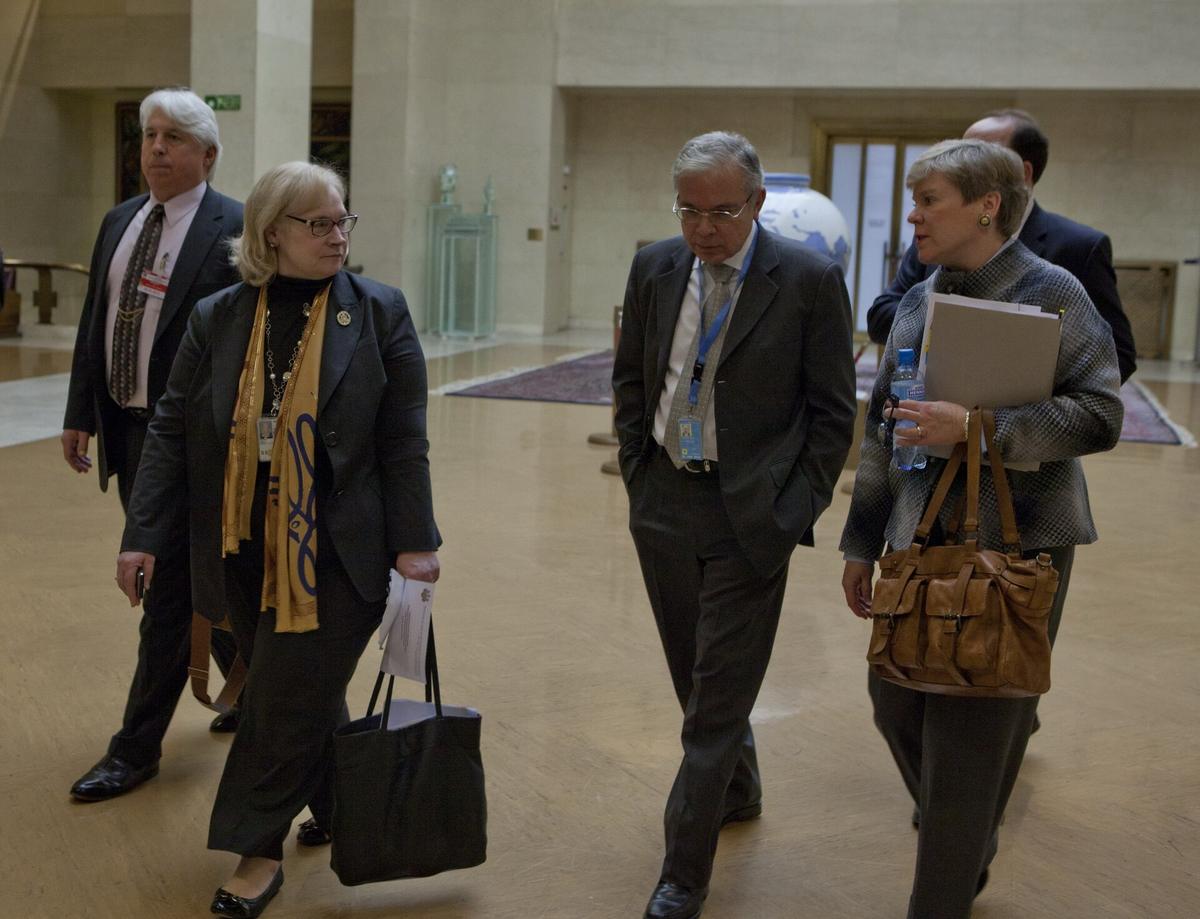
The rotating host city is the defining reason WorldMUN draws the most internationally mixed delegate pool of any large university MUN gathering. A committee in Tokyo draws heavily from East Asian and Southeast Asian universities, plus North American delegates willing to fly long-haul. A committee in Brussels draws from European, Middle Eastern, and African universities. A committee in Taipei draws a strong South and Southeast Asian presence. The mix is not random; it is a function of geography and travel cost. A delegate from the University of Tokyo is far more likely to attend WorldMUN in Taipei than in Rome. A delegate from Sciences Po in Paris is far more likely to attend in Rome than in Taipei.
The result is a committee room where no single regional bloc dominates. At HMUN in Boston, the delegate pool is heavily North American. At THIMUN in The Hague, the pool is heavily European and Middle Eastern. At WorldMUN, the pool shifts every year, which means delegates must negotiate with people from a wider range of national backgrounds than at any fixed-host event. The working language is English, but the fluency level varies. A delegate who can read Harvard procedure comfortably, including moderated caucus (structured debate on a specific topic) and unmoderated caucus (informal negotiation time), has an advantage over one who learned a different rules family.
| Attribute | Value |
|---|---|
| Organising body | Harvard International Relations Council (HIRC) |
| Host model | Rotating annual host city, selected by HIRC |
| 2026 host city and dates | Rome, Italy; Sapienza University of Rome; 2026-03-16 to 2026-03-20 |
| 2025 host city | Belo Horizonte, Brazil |
| 2024 host city | Taipei, Taiwan |
| Delegate level | University |
| Minimum delegate age | 18 years at time of conference |
| Working language | English |
| Rules of procedure | Harvard-style (modified UNA-USA) |
| Typical committee count | 20–30 committees |
| Typical delegate count | 1,500–2,200 delegates (estimated; no single published figure) |
| Delegation type | University delegations only; no individual registration |
| Delegation size range | 1–30+ delegates per university |
| Registration route | myHNMUN portal, head delegate or faculty advisor |
| 2026 delegate fee | Early and regular bands; check myHNMUN for current pricing |
| Fee inclusions | Conference access, materials, ceremonies, social events |
| Fee exclusions | Travel, accommodation, meals, visa costs |
| Award categories | Best Delegate, Outstanding Delegate, Honorable Mention, Best Position Paper, Outstanding Position Paper |
| Position paper requirement | Mandatory for award eligibility |
WorldMUN Delegate Costs: Why it is Premium and What That Means for Your Budget
WorldMUN sits in the premium cost band among university MUN gatherings. The registration fee itself is not premium; NMUN in New York charges comparable per-delegate fees. The premium label comes from the variable costs that the rotating host model forces on most delegations. A delegation from a university in the United States attending WorldMUN in Paris in 2023 paid for transatlantic flights, four nights in a Paris hotel, meals in a city with a high cost of living, and potentially Schengen visa fees. A delegation attending NMUN in New York paid for domestic flights or ground transport, a Manhattan hotel, and no visa fees. The difference is not subtle.
The Harvard International Relations Council publishes registration fees with a stated year and source on the myHNMUN portal. Those fees are moderate. The reason WorldMUN is a premium event is that the total cost for most delegates is dominated by items the conference does not control: airfare, hotel rates that fluctuate with the host city's convention calendar, and visa application fees that vary by nationality. Budget for at least three times the registration fee per delegate for a conference on the same continent, and five times or more for a conference on a different continent.
Who Should Attend WorldMUN and Who Should Skip it
WorldMUN suits the university delegate who values international exposure over procedural polish. If you want to sit in a committee with delegates from twenty or more nationalities, negotiate with people who learned MUN in a different rules tradition, and experience a new city as part of the event, WorldMUN is the best option among the large university gatherings. It also suits the experienced delegate who has already competed at HMUN or NMUN and wants a different kind of challenge: adapting to a shifting regional bloc dynamic and a host city that changes the conference culture every year.
Skip WorldMUN if you are on a tight budget and cannot absorb variable travel costs. If your university can afford only one conference per year and needs predictable costs, a fixed-host event like NMUN in New York or HMUN in Boston is safer. WorldMUN also does not suit the delegate who prefers a THIMUN-style formal debating culture. The Harvard procedure at WorldMUN rewards coalition-building and unmoderated caucus negotiation, not the incremental amendment process of THIMUN. If you want a conference where every speaking turn is on a formal speakers' list and resolutions are built from the floor, attend THIMUN in The Hague instead.
What Faculty Advisors Must Do
Faculty advisors must budget for the variable costs and plan the application timeline. The application opens in September of the year before the conference and closes in November. Assignment of countries and committees happens after that, so you cannot commit to flights until you know your delegates' committee schedules. The visa application timeline varies by host country; for a conference in Italy, book Schengen visa appointments as soon as the conference dates are confirmed. The myHNMUN portal handles all registration, but verify that every delegate is at least 18 years old at the time of the conference.
The Real Award Drivers at WorldMUN and the Gap Between Published Criteria and Reality
WorldMUN publishes its award criteria as in-committee performance, diplomacy, resolution authorship, speech quality, and negotiation skill. Position papers are scored separately. The gap between stated criteria and reality is standard for large events: dais visibility and bloc leadership dominate the award decision. A delegate who writes a strong position paper but speaks only once during moderated caucus and never leads a bloc during unmoderated caucus will not win Best Delegate. A delegate who writes an average position paper but speaks frequently, builds a coalition, and authors the resolution that passes will be remembered when the dais fills out award rubrics.
The award tiers are Best Delegate, Outstanding Delegate, Honourable Mention, Best Position Paper, and Outstanding Position Paper. That is a compressed hierarchy. Five tiers means the awards carry more weight than at conferences with six or seven tiers. The dais in each committee decides awards, and the committee has between 30 and 100 delegates. To win, be visible. Join or lead a bloc. Speak during both moderated caucus and the formal speakers' list. The quiet delegate who writes well will not win unless the committee is very small.
Full specification
| Individual delegates or school delegations | University delegations and individuals | manufacturer |
|---|---|---|
| Run by | Harvard, with a local host university | manufacturer |
| Where | Rotates; a different host city each year | manufacturer |
| What it is known for | Rotating host city, which makes it the most internationally mixed of the large university conferences | manufacturer |
| Working language | English | manufacturer |
| Who it is for | University | manufacturer |
Figures labelled manufacturer are the maker's own claim and are measured by them. Owner reported figures are aggregated from owners and are the ones worth planning around.
Frequently Asked Questions About WorldMUN
Does WorldMUN use Harvard procedure or THIMUN procedure?
WorldMUN uses Harvard-style procedure, a modified version of UNA-USA rules. Delegates can motion for moderated caucus and unmoderated caucus, and resolutions are authored by blocs and introduced as documents. This is distinct from THIMUN procedure, which uses formal speakers' lists and builds resolutions incrementally through amendments on the floor.
Can I register as an individual delegate for WorldMUN?
No. WorldMUN accepts only university delegations. A head delegate or faculty advisor submits a delegation application through the myHNMUN portal. There is no individual delegate registration. If your university does not have a MUN programme, you cannot attend unless you join a delegation from another university.
How competitive is the WorldMUN application process?
The application is reviewed by HIRC and is not first-come-first-served. Selection criteria include delegation size request, past participation, geographic diversity, and application quality. There is no published acceptance rate, but demand exceeds capacity for popular committee assignments, and strong applications from underrepresented regions are favoured.
What is the difference between a crisis committee and a General Assembly committee at WorldMUN?
General Assembly committees simulate UN bodies and produce resolutions through preambulatory and operative clauses. Crisis committees simulate individuals rather than states, respond to real-time fictional updates via directives, and manage personal resources. Crisis committees are smaller and faster-paced. WorldMUN offers both types, along with Specialised Agencies and Historical Committees.
Is the position paper requirement enforced for award eligibility?
Yes. A position paper is mandatory to be considered for any award tier, including Best Delegate, Outstanding Delegate, Honourable Mention, and the position paper awards themselves. The deadline is two to three weeks before the conference. Late submissions or non-submission disqualify the delegate from awards regardless of in-room performance.
Read next
-
 MUN Conference Safety: Safeguarding, Travel, and Supervision Responsibilities
A practical guide to safeguarding, travel, and supervision responsibilities for schools and universities sending delegations to MUN conferences abroad.
MUN Conference Safety: Safeguarding, Travel, and Supervision Responsibilities
A practical guide to safeguarding, travel, and supervision responsibilities for schools and universities sending delegations to MUN conferences abroad.
-
 How to Identify MUN Rules of Procedure: THIMUN vs Harvard-Style
A side-by-side guide to identifying whether a conference runs THIMUN or Harvard-style procedure, with a diagnostic question any delegate can apply.
How to Identify MUN Rules of Procedure: THIMUN vs Harvard-Style
A side-by-side guide to identifying whether a conference runs THIMUN or Harvard-style procedure, with a diagnostic question any delegate can apply.
-
 THIMUN The Hague
How THIMUN The Hague works: the definitive THIMUN procedure conference with delegation-only registration and consensus-driven resolution-building.
THIMUN The Hague
How THIMUN The Hague works: the definitive THIMUN procedure conference with delegation-only registration and consensus-driven resolution-building.
-
 London International Model United Nations
LIMUN accepts individual delegates readily, which changes everything for applicants without a university MUN society. How solo registration shapes the conference.
London International Model United Nations
LIMUN accepts individual delegates readily, which changes everything for applicants without a university MUN society. How solo registration shapes the conference.
-
 Berlin Model United Nations
BERMUN is a THIMUN-affiliated school-level conference in Berlin where procedure is driven by formal speakers' lists and lobbying, not moderated caucus.
Berlin Model United Nations
BERMUN is a THIMUN-affiliated school-level conference in Berlin where procedure is driven by formal speakers' lists and lobbying, not moderated caucus.
-
 Harvard Model United Nations
What a delegation needs before applying to HMUN: Harvard procedure, competitive awards, and the moderated caucus system explained.
Harvard Model United Nations
What a delegation needs before applying to HMUN: Harvard procedure, competitive awards, and the moderated caucus system explained.
-
 National Model United Nations
What NMUN's sessions at UN Headquarters in New York actually mean for a delegate—and what they do not. The university-level pedagogical conference explained.
National Model United Nations
What NMUN's sessions at UN Headquarters in New York actually mean for a delegate—and what they do not. The university-level pedagogical conference explained.
-
 Oxford International Model United Nations
OxIMUN and LIMUN are cross-shopped constantly. The practical differences in registration, committee size, and Oxford vs. London logistics compared.
Oxford International Model United Nations
OxIMUN and LIMUN are cross-shopped constantly. The practical differences in registration, committee size, and Oxford vs. London logistics compared.
-
 THIMUN Procedure vs Harvard Parliamentary Procedure: What a Delegate Does Differently
A delegate-facing comparison of THIMUN and Harvard parliamentary procedure, covering speaking, document-building, and coalition-forming differences.
THIMUN Procedure vs Harvard Parliamentary Procedure: What a Delegate Does Differently
A delegate-facing comparison of THIMUN and Harvard parliamentary procedure, covering speaking, document-building, and coalition-forming differences.