Comparing HMUN and HNMUN: Harvard's High School and University MUN Conferences
HMUN is Harvard's high school MUN conference in Boston; HNMUN is its university-level counterpart. Applying to the wrong one wastes an application cycle.
HMUN vs HNMUN Comparison: the Difference That Wastes an Application Cycle
A high school student applying to HNMUN and a university student applying to HMUN are both about to lose an entire application cycle to a name mix-up. It is the single most common error in competitive Model United Nations. HMUN runs for high schoolers in Boston. HNMUN runs for university students at a host city that changes every year. The comparison starts and ends with participant age, because the events share a parent organisation, the same Harvard-style procedure, and the same Harvard International Relations Council secretariat. But they serve entirely separate pools. Apply to the wrong one and your school forfeits the registration fee and loses its spot for the season.
| Attribute | HMUN (High School) | HNMUN (University) |
|---|---|---|
| Participant Level | High school (grades 9–12) | University (undergraduate and graduate) |
| Age Range | 14–18 years old | 18+ years old; no upper limit specified by the organisers |
| Admission Model | School delegations only; no individual registration | School delegations only; no individual registration |
| Committee Count | 30+ committees | 30+ committees |
| Procedure Family | Harvard-style (moderated caucus, unmoderated caucus, speakers' list) | Harvard-style (moderated caucus, unmoderated caucus, speakers' list) |
| Host City | Boston, Massachusetts, USA | Varies annually; historically held in Latin American cities |
| Organising Body | Harvard International Relations Council (Harvard College) | Harvard International Relations Council (Harvard College) in partnership with a local host institution |
| Known For | Largest Harvard-style high school gathering; highly competitive selection; strong crisis committees | Harvard-style gathering held in Latin America; draws primarily university groups from the Americas |
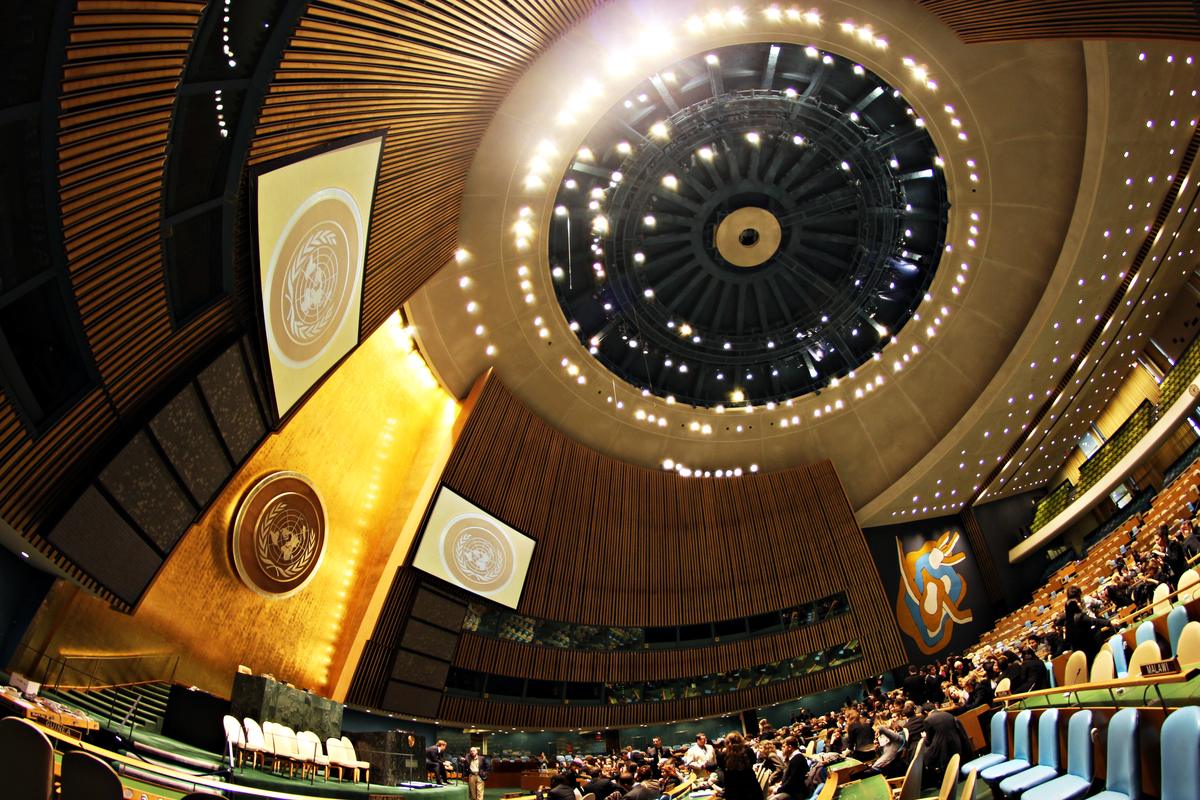
.jpg)
HMUN and HNMUN Differences: Eligibility is Not a Suggestion
Age Gates and the Cost of Getting It Wrong
The age range is the single rule that gates everything else. HMUN admits participants in the 14-18 range, which means grades 9 through 12 in the US system and the equivalent secondary-school years internationally. HNMUN admits participants who are 18 or older, covering undergraduate and graduate students. A faculty advisor who submits a high school group to HNMUN will have those students turned away at registration. The gathering cannot accommodate minors under its safeguarding policies and the host-country legal framework for the venue that year. A university student who registers for HMUN is overqualified for the committee level. They will compete against students who are four to six years younger. The dais evaluates high school position papers against high school expectations, not university-level research. The older participant gains no advantage and wastes a cycle they could have spent on a competitive university event.
Shared Procedure, Different Committee Culture
The confusion persists because both events are run by the same Harvard International Relations Council secretariat. Both use Harvard procedure: the flow of debate moves through speakers' list, moderated caucus, unmoderated caucus, and working papers that become draft resolutions. Both publish study guides written by their respective dais teams, and both require a position paper for award eligibility. But the committee culture diverges sharply because of the age gap. An HMUN committee of 14-to-18-year-olds operates with a steeper learning curve for first-timers. Bloc formation during unmoderated caucus is faster and more social, and the dais spends more time explaining points of order and points of inquiry. An HNMUN committee assumes every participant can manage the speakers' list, knows how to motion for a moderated caucus on a specific sub-topic, and can write preambulatory and operative clauses without coaching.
What Award Tiers Actually Measure
The award tiers at both events follow the standard hierarchy: Best, Outstanding, Honourable Mention, Verbal Commendation. The standard for winning at HNMUN is higher because the pool includes students who have already done four years of high school MUN. A position paper that earns Honourable Mention at HMUN may not place at HNMUN. The dais at the university-level event does not scale expectations down.
Which Harvard MUN Conference to Apply To: a Decision Rule
Choose HMUN
Pick HMUN if you are a faculty advisor or club officer managing a high school group, if your students are in the 14-18 age range, and if your team needs the flagship Harvard-style experience with the largest high school committee selection in the US.
Choose HNMUN
Pick HNMUN if you are a university student or a gap-year applicant who has aged out of high school events, if your group wants a Harvard-run experience in a host city that rotates annually, and if you are prepared for a pool that includes graduate students and former high school award winners.
Hard Age Rules and Proof of Eligibility
HNMUN age requirements are strict: no participant under 18 may register. The event does not make exceptions for exceptional high school students, because the host-country visa requirements and the local venue's liability insurance do not permit minors. A high school senior who turns 18 during the event month still cannot apply unless their 18th birthday falls before the registration deadline. The burden of proof falls on the faculty advisor to document the date. The same rule applies in reverse for HMUN: a university student who is 19 but still in their first undergraduate year cannot apply. The event defines itself as school-level, and a university group would distort the bloc dynamics and the dais's evaluation rubric. Harvard publishes both eligibility rules on the HMUN and HNMUN websites each year; the page for each event lists the age range in the registration section. Faculty advisors should read that line before they submit the application.
Worth it if
- HMUN gives high school students access to the largest Harvard-style gathering, with 30+ committees and a strong crisis committee selection.
- HNMUN offers university students a Harvard-run experience outside the US, with a rotating host city that avoids the Boston cost premium.
- Both events use the same Harvard procedure, so a student who learns the flow of debate at HMUN can transfer directly to HNMUN without retraining.
- The Harvard International Relations Council secretariat produces consistent study guides and position-paper rubrics across both events.
Skip it if
- Applying to the wrong event wastes the entire application cycle: the registration fee is non-refundable and the group forfeits its country assignment.
- A high school student cannot apply to HNMUN under any circumstance, and a university student is overqualified for HMUN, which creates a lopsided committee dynamic.
- Event dates, fees, and committee topics change annually; a faculty advisor who relies on last year's information will submit an outdated application.
- HNMUN's host city changes every year, which complicates travel planning for groups that need to budget for a new destination each cycle.
Common Questions
Can a high school senior apply to HNMUN if they turn 18 before the conference starts?
No. HNMUN age requirements state that all participants must be 18 or older at the time of registration, not just at the event date. A high school senior who turns 18 after the registration deadline cannot apply. The event does not make exceptions, because the host-country visa framework and the venue's liability insurance for minors apply from the registration date.
What happens if a university group accidentally applies to HMUN instead of HNMUN?
The application will be rejected when the faculty advisor's affiliation is verified against the school-level eligibility rules. HMUN registration is limited to secondary-school groups. The group loses the application fee and must reapply to HNMUN if the HNMUN registration window is still open. Most events close registration eight to twelve weeks before the start, so the delay often costs the group the entire cycle.
Do HMUN and HNMUN use the same rules of procedure?
Yes. Both events use Harvard-style procedure, which includes moderated caucus, unmoderated caucus, and speakers' list, with working papers that become draft resolutions. The dais in each committee manages points of order, points of inquiry, and points of personal privilege identically. A student who has chaired at HMUN can dais at HNMUN without retraining.
Which conference has more competitive awards?
HNMUN is more competitive because the pool includes undergraduate and graduate students who have three to six years of MUN experience. The award tiers are the same (Best, Outstanding, Honourable Mention, Verbal Commendation), but the standard for each tier is higher. A position paper that wins Honourable Mention at HMUN may not place at all at HNMUN.
Can a student attend both HMUN and HNMUN in the same year?
Only if they are a university student who also meets HMUN's eligibility rules, which they do not. A high school student cannot attend HNMUN. A university student is overqualified for HMUN. The events run on separate schedules, but the eligibility rules prevent any student from attending both in a single cycle.
How does the faculty advisor role differ between HMUN and HNMUN?
At HMUN, the faculty advisor acts as chaperone, budget-holder, and coach for a team of 14-to-18-year-old students. At HNMUN, the faculty advisor role is lighter because the participants are adults; the advisor manages the group budget and coordinates travel but does not supervise minors. Both events require a faculty advisor to submit the application.
What is the delegate-to-staff ratio at each conference?
Neither event publishes a verified ratio. The figure varies by committee and by the number of dais members assigned. In practice, a committee of 60 students typically has one chair, one co-chair, and one rapporteur, giving a ratio of roughly 20:1. A larger committee may add two dais assistants, shifting the ratio to roughly 30:1.
Read next
-
 THIMUN Procedure vs Harvard Parliamentary Procedure: What a Delegate Does Differently
A delegate-facing comparison of THIMUN and Harvard parliamentary procedure, covering speaking, document-building, and coalition-forming differences.
THIMUN Procedure vs Harvard Parliamentary Procedure: What a Delegate Does Differently
A delegate-facing comparison of THIMUN and Harvard parliamentary procedure, covering speaking, document-building, and coalition-forming differences.
-
 LIMUN vs OxIMUN: Comparing the UK's Two Largest University MUN Conferences
LIMUN and OxIMUN are the UK's two largest university MUN conferences. The practical difference is the admission route for a delegate without a society.
LIMUN vs OxIMUN: Comparing the UK's Two Largest University MUN Conferences
LIMUN and OxIMUN are the UK's two largest university MUN conferences. The practical difference is the admission route for a delegate without a society.
-
 Best MUN Conferences for a First Conference, Ranked on Survivability
MUN conferences ranked on what makes them survivable for a first-time delegate—beginner committees, published rules, and realistic applications—not on prestige.
Best MUN Conferences for a First Conference, Ranked on Survivability
MUN conferences ranked on what makes them survivable for a first-time delegate—beginner committees, published rules, and realistic applications—not on prestige.
-
 MUN Conferences That Accept Individual Delegates Without a School Delegation
A directory of MUN conferences that accept individual delegates without a school or university delegation, for students who lack a society.
MUN Conferences That Accept Individual Delegates Without a School Delegation
A directory of MUN conferences that accept individual delegates without a school or university delegation, for students who lack a society.