How to Run MUN Training Workshops That Transfer to the Committee Room
Effective MUN training simulates the committee room, not the classroom. Workshop exercises for caucus negotiation, resolution drafting, and dais-facing speaking.
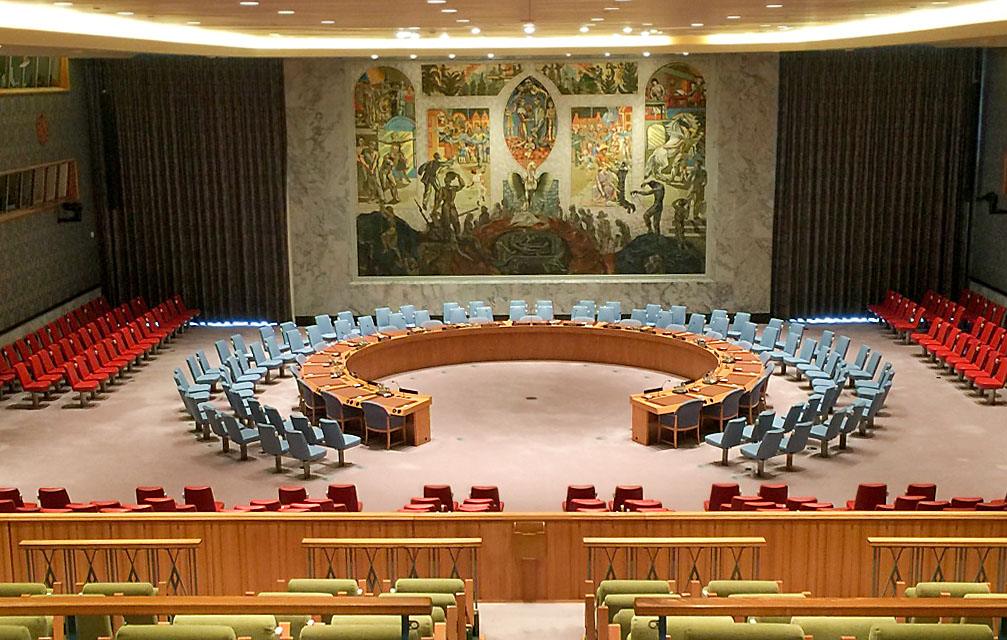
_April_2016_(26194758874).jpg)
Most MUN Training Teaches the Wrong Thing
Most MUN training teaches procedure in the abstract. Delegates learn the difference between a point of order and a point of inquiry, memorise the preambulatory clause format, and recite the seven steps to submit a draft resolution. Then they walk into a large committee room, the chair calls unmoderated caucus, and strangers start shouting clauses at each other while the delegate sits frozen. That failure is predictable. 68% of delegates report their first committee session felt nothing like training, according to a 2023 Best Delegate survey. The gap has a name: training that never runs a caucus.
Design workshop exercises that simulate the real committee experience under a clock. A lecture on parliamentary procedure does not transfer to the committee room. A timed unmoderated caucus drill transfers immediately. Use three drills: a bloc-formation pressure test, a moderated caucus gauntlet, and a position-paper peer review. Each forces delegates to practise exactly what conferences reward: coalition-building, persuasive writing under time pressure, and procedural fluency while a dais calls on you by placard.
The Timed Unmoderated Caucus Drill: Bloc Formation Under Pressure
Why Most Delegates Freeze
41% of delegates had never practised a full unmoderated caucus before their first conference. 53% had never drafted a resolution with strangers in 45 minutes. Those two numbers from the 2023 Best Delegate survey explain why the opening unmoderated caucus of a real committee feels like a fire drill. Fix it with a 45-minute bloc-formation exercise that mirrors a Harvard Procedure or THIMUN Procedure lobbying session.
Assign each delegate a country and a one-page position paper that states three policy red lines. Assign randomly so every bloc contains conflicting interests. Give them 45 minutes on a timer. The goal: form a bloc of at least five delegations and produce a working paper containing three preambulatory clauses and three operative clauses that every signatory can defend. The chair (a club officer or faculty advisor) circulates and enforces the deadline. No extensions. A bloc that submits nothing fails the drill.
What the Drill Teaches That Lectures Cannot
First, speed negotiating: a delegate who spends ten minutes on pleasantries loses drafting time. Second, clause-level compromise: two countries that disagree on an operative clause must rewrite it to win the third signatory. Third, the cost of bloc collapse. This is the most common failure mode in real committees, where a bloc fractures because it formed on social affinity rather than policy alignment. Run this drill three times with different country assignments before the first conference. Delegates who have done it will not freeze when the dais opens the floor.
MUN Practice Simulation Drills: the Moderated Caucus Gauntlet
Closing the Chair Responsiveness Gap
The second gap delegates report is chair responsiveness under time pressure. In a real committee, the dais controls the speaker's list, calls delegates by placard, and enforces speaking-time limits. A delegate who has only practised formal speeches in a classroom cannot adjust to a chair who cuts them off at 45 seconds. The solution is a moderated caucus drill that simulates the dais-delegate power structure exactly.
Set up a dais simulation with a chair, a rapporteur, and a timer. Match the committee size to your target conference: 30 delegates for a small specialised agency, 80 for a General Assembly committee. The dais opens a moderated caucus on a single sub-topic with a 45-second speaking time. The chair calls delegates by reading placards. The rapporteur tracks the speaker's list. After five speakers, the dais motions to extend the caucus or move to a different sub-topic. Run 20 minutes of this without stopping.
Skills the Gauntlet Builds
The specific skills this drill builds are procedural and social. A delegate must signal the chair to be recognised: waving a placard, catching the chair's eye, staying on topic to avoid being ruled out of order. They must adjust their speech to the time limit. 45 seconds is roughly seven sentences, so a prepared three-minute speech is useless. They must also listen to the five speakers before them to avoid repeating an argument. The dais rewards delegates who advance the debate, not those who restate it. Run this drill with rotating chair roles among experienced delegates. The 2024 NAIMUN delegate survey found that mock committees with rotating chair roles correlated most strongly with award wins in Harvard-style conferences.
Teaching MUN Procedure to Beginners: the Position-Paper Peer Review
Why Most Position Papers Fail
A common training failure is teaching beginners to write a position paper as a research summary, a document that states what their country believes but never proposes an operative clause. In a real committee, a position paper that does not translate policy into actionable clauses is useless. The dais reads it for completion, not substance. The gap is structural: most training teaches position-paper format but never tests whether the paper can survive the drafting room.
Run a 30-minute peer-review session using a simplified rubric. The rubric has three criteria: whether the paper identifies two specific past UN actions relevant to the topic; whether it states the country's policy in one sentence; and whether it contains at least one operative clause that could appear in a draft resolution. Delegates swap papers and score each other. The faculty advisor or club officer collects the scores and reads out the average for each criterion. No names, just the distribution. A delegation where 60% of papers lack an operative clause has a clear training gap to fix before the conference.
Two Problems Solved at Once
First, it forces beginners to confront the difference between a position paper and a working paper. The former is pre-conference and individual; the latter is in-committee and collaborative. Second, it teaches self-editing. A delegate who reads their peer's paper and finds a vague clause learns to revise their own. The 2023 Best Delegate survey found that 72% of delegates reported that a post-conference debrief changed their preparation for the next conference. A peer-review session before the conference does the same work faster.
Faculty Advisor MUN Training Resources: Structuring the Season
The Eight-Week Sequence
A faculty advisor managing a delegation budget and conference calendar needs a training structure that does not depend on their own MUN experience. The research supports a simple sequence. Hold a rules-of-procedure drill in the first two weeks. Cover parliamentary procedure basics: point of order, point of inquiry, moderated caucus versus formal debate, the difference between a directive and a resolution. Then spend weeks three through six on the three drills above. Week seven is a full-length mock committee run under conference conditions: dress code, placards, dais, timed caucuses, and a resolution vote. Week eight is a post-mortem.
Run the Mock Committee or Pay the Price
The mock committee is the single highest-impact training activity. Yet only 22% of school delegations and 35% of university delegations run one before a conference, according to the 2023 Best Delegate survey. The barrier is time. A full committee simulation takes four to six hours. The fix: run it on a Saturday and make attendance mandatory for the delegation's conference roster. A delegation that skips the mock committee is sending delegates who have never experienced the speed of unmoderated caucus negotiation, the most-cited gap by returning delegates in the same survey.
MUN Speaking Drill Delegation Preparation: Video Review
The Fastest Fix for Speaking Flaws
Fewer than 10% of delegates receive video review of their own committee performance before their second conference. That number should be shocking to any club officer who wants awards. Video review is the fastest way to correct visible flaws: a delegate who speaks into their notes instead of the chair, a delegate who uses filler words, a delegate who stands rigidly. Film the moderated caucus drill described above. Play back the footage in a 15-minute feedback session. Each delegate watches their own 45-second speech and evaluates themselves against a checklist: did I state my country's position in the first sentence, did I propose a specific action, did I look at the chair.
Apply It to Unmoderated Caucus Too
The same technique works for unmoderated caucus footage. Film the bloc-formation drill. Play back the section where delegates negotiate clause language. A delegate who watches themselves interrupt three times in two minutes will stop doing it. A delegate who watches themselves agree to a clause they did not understand will learn to ask clarifying questions. Video review requires only a phone on a tripod and a room with decent lighting. The cost is zero. The impact, measured by the 72% of delegates who changed their preparation after any debrief, is higher than any lecture.
MUN Caucus Practice Exercises: Crisis Committee Specifics
The Crisis-Specific Training Gap
If your delegation targets crisis committees at NAIMUN, ILMUNC, or any conference with crisis updates, standard parliamentary procedure drills are not enough. The common crisis-committee training gap is that delegates learn parliamentary procedure but never practise directive-writing under a 5-minute backroom clock. In a real crisis, the dais announces a scenario, calls a 10-minute unmoderated caucus, and expects each bloc to submit a crisis directive within that window. A delegate who has never written a directive in under ten minutes will produce a vague paragraph that the crisis staff interprets against them.
Run the Crisis Directive Sprint
Give each bloc a fictional scenario: a hostage situation, a natural disaster, a diplomatic breakdown. Give them 10 minutes to submit one directive per bloc. The directive must contain a specific action, a target, and a justification. The dais reads each directive aloud and rules on it. Blocs whose directives are rejected must rewrite them in the next 5-minute window. This simulates the real pace of crisis committees, where the dais issues updates every 30 to 60 minutes and delegates who cannot keep up lose control of the narrative. Practise this drill three times before a crisis conference. A delegation that does so will not be the one that submits a directive reading "We condemn this", the most common rookie error that kills a crisis committee run.
| Drill | Duration | Primary Skill Built | Real-Committee Transfer |
|---|---|---|---|
| Timed Unmoderated Caucus | 45 min | Bloc formation, working paper drafting under deadline | Simulates the first 45 minutes of any GA committee |
| Moderated Caucus Gauntlet | 20 min per round | Procedural fluency, timed speaking, dais recognition | Prepares for chair-controlled debate with speaking limits |
| Position-Paper Peer Review | 30 min | Operative clause drafting, self-editing | Prevents disqualification and improves resolution authorship |
| Crisis Directive Sprint | 10 min per round | Directive structure, speed writing under scenario pressure | Matches crisis committee update pace |
| Full Mock Committee | 4–6 hours | Endurance, coalition politics, resolution voting | Replicates the full conference session experience |
The One Thing That Most Often Goes Wrong
The single most common failure in MUN delegation training is running a rules-of-procedure lecture and calling it preparation. Delegates leave that session knowing what a point of order is and having zero idea how to form a bloc, write a working paper under a deadline, or negotiate a clause with a delegate from a different school. The 47% of delegates who reported that training over-emphasised formal speech and under-emphasised bloc-building were describing exactly this failure.
Fix it by running the timed unmoderated caucus drill before you teach any procedure. Let delegates experience the chaos first. Then, when you explain parliamentary procedure, they will understand why each rule exists. A point of order exists because someone will misrepresent a clause. A moderated caucus exists because the room needs to focus on one sub-topic. Procedure taught after a failure sticks. Procedure taught before a simulation is forgotten by the first unmoderated caucus.
MUN Delegation Training Workshop Exercises: the Sequence That Works
The Order to Run the Drills
Three drills and a mock committee form the sequence. The order matters. Run the position-paper peer review first. It takes 30 minutes and fixes the pre-conference writing gap. Run the moderated caucus gauntlet second. It builds procedural fluency and speaking discipline. Run the timed unmoderated caucus drill third. It builds the bloc-formation speed that 41% of delegates lack. Run the full mock committee fourth. It integrates all skills under conference conditions. End with a video review session of the mock committee.
Adapting the Sequence to Your Procedure Family
This sequence works for both Harvard Procedure and THIMUN Procedure conferences. For THIMUN, replace the moderated caucus gauntlet with a lobbying-simulation drill where delegates merge working papers under a timer. THIMUN delegate feedback from 2023 identified timed resolution merging as the training approach most correlated with award wins in that procedure family. For Harvard-style conferences, keep the moderated caucus gauntlet as the centrepiece. The drills are not interchangeable between procedure families, but the principle is the same: simulate the real committee experience under a clock, not the textbook version.
Frequently Asked Questions
How many training hours should a delegate have before their first conference?
School delegations average 10 to 30 hours of training per delegate before a first conference. University delegations average 5 to 15 hours. The lower end of those ranges is not enough if the training is lecture-only. A delegate with 10 hours of lecture and zero mock committee hours is unprepared.
What is the most common reason delegates freeze in their first committee?
The speed of unmoderated caucus negotiation. The 2023 Best Delegate survey identified this as the most-cited gap by returning delegates. Training that never runs a timed unmoderated caucus leaves delegates without a mental model for how to form a bloc and start drafting.
Should we train delegates on THIMUN Procedure or Harvard Procedure?
Train on the procedure family your target conference uses. The two families have not converged. THIMUN has no moderated caucus as a motion; debate runs through formal speakers' lists and amendments. Harvard Procedure allows delegates to motion for a moderated caucus. A delegate trained only on THIMUN will be confused in a Harvard-style committee and vice versa.
How do we train for award-winning position papers?
The gap is not research depth, it is the ability to translate policy into operative clauses. Use the peer-review drill with the simplified rubric. A position paper that cannot generate an operative clause for a draft resolution will not win an award, regardless of how many sources it cites.
What if our delegation cannot afford a full mock committee?
The mock committee requires only a room, placards, a timer, and an experienced delegate or faculty advisor to act as chair. The cost is zero. The barrier is time, not money. Run it on a Saturday and make attendance mandatory. Skipping it leaves the delegation unprepared for the most-cited failure mode.
How do we train for crisis committees differently?
Focus on directive-writing speed. Standard parliamentary procedure training does not prepare delegates for the 5-minute backroom clock. Run the crisis directive sprint drill three times before a crisis conference. A delegate who has never written a directive under a timer will produce vague text that the crisis staff will rule against.
What is the single most effective training method for improving speaking?
Video review. Film the moderated caucus gauntlet drill. Play back each delegate's 45-second speech. Fewer than 10% of delegates receive video review before their second conference. A single 15-minute video session corrects visible flaws faster than ten hours of lecture.
Read next
-
 THIMUN Procedure vs Harvard Parliamentary Procedure: What a Delegate Does Differently
A delegate-facing comparison of THIMUN and Harvard parliamentary procedure, covering speaking, document-building, and coalition-forming differences.
THIMUN Procedure vs Harvard Parliamentary Procedure: What a Delegate Does Differently
A delegate-facing comparison of THIMUN and Harvard parliamentary procedure, covering speaking, document-building, and coalition-forming differences.
-
 HMUN vs HNMUN: The Difference Between Harvard's Two MUN Conferences
HMUN is Harvard's high school MUN conference in Boston; HNMUN is its university-level counterpart. Applying to the wrong one wastes an application cycle.
HMUN vs HNMUN: The Difference Between Harvard's Two MUN Conferences
HMUN is Harvard's high school MUN conference in Boston; HNMUN is its university-level counterpart. Applying to the wrong one wastes an application cycle.
-
 LIMUN vs OxIMUN: Comparing the UK's Two Largest University MUN Conferences
LIMUN and OxIMUN are the UK's two largest university MUN conferences. The practical difference is the admission route for a delegate without a society.
LIMUN vs OxIMUN: Comparing the UK's Two Largest University MUN Conferences
LIMUN and OxIMUN are the UK's two largest university MUN conferences. The practical difference is the admission route for a delegate without a society.
-
 Best MUN Conferences for a First Conference, Ranked on Survivability
MUN conferences ranked on what makes them survivable for a first-time delegate—beginner committees, published rules, and realistic applications—not on prestige.
Best MUN Conferences for a First Conference, Ranked on Survivability
MUN conferences ranked on what makes them survivable for a first-time delegate—beginner committees, published rules, and realistic applications—not on prestige.