A Directory of Model United Nations Conferences Sorted by Procedure and Delegate Level
A directory of Model United Nations conferences sorted by procedure family, delegate level, and registration model, not by prestige.
This Directory Routes You by What You Can Control, Not by Prestige
If you were trained in Harvard procedure, you will fail at a THIMUN conference your first time. The reverse is equally true. The two procedural families share vocabulary but reward opposite instincts. This directory routes you by three factors you actually control: your age level, whether you arrive with a delegation or alone, and which rules of procedure you know. Every conference listed below links to a page that names its procedure family near the top, states who should not apply, and never treats THIMUN and Harvard styles as interchangeable.
- Primary Divide: THIMUN vs Harvard procedure. One uses formal speakers lists and lobbying; the other uses moderated caucus and unmoderated caucus as main debating modes.
- Admission Models: Delegation-only (school or university sends a group) vs individual delegate registration (you sign up alone). Most school-level conferences require a delegation.
- Age Levels: Secondary school (high school) conferences vs university-level conferences. Age ranges matter: a 14-year-old in a room of 18-year-olds negotiates from a different position.
- Award Reality: Published rubrics matter less than dais visibility and bloc leadership. A quiet delegate with a strong position paper rarely wins Best Delegate.
The Procedural Divide: THIMUN vs Harvard Style
How THIMUN Procedure Works
THIMUN procedure, named for The Hague International Model United Nations, has no moderated caucus. Debate runs through a formal speakers list. Delegates write working papers that merge into draft resolutions through lobbying. The goal is consensus. A delegate who tries to motion for a moderated caucus in a THIMUN committee will be ruled out of order.
How Harvard Procedure Works
Harvard procedure, developed at Harvard Model United Nations, uses moderated caucus as a motion any delegate can call. Unmoderated caucus is where blocs form and resolutions are written. The pace is faster. The room rewards delegates who can pivot from formal speaking to informal negotiation in seconds. A delegate trained in Harvard style who enters a THIMUN committee expecting to motion for a moderated caucus will spend the first session confused.
Hybrid Conferences
Some conferences run hybrid procedure, blending elements from both families. The Model United Nations of the University of Chicago uses a hybrid. London International Model United Nations does the same. When a conference calls itself hybrid, read the rules of procedure document before you apply. Hybrid conferences do not produce the same experience as either pure family.

How to Choose an MUN Conference: Three Filters to Apply First
Filter by Age Level
Start with your age level. University-level conferences like National Model United Nations or Harvard National Model United Nations expect delegates to be enrolled undergraduates. Secondary school conferences like HMUN, NAIMUN, or MUNUC accept high school students. Some conferences publish a delegate age range. If the range is wide, a 15-year-old may end up in committee with a 19-year-old. That age gap distorts negotiation dynamics because the older delegate has more experience and a stronger voice. For a first-time high school delegate, a conference with a tight age range close to your own year is safer.
Filter by Registration Model
Second filter: your registration model. If your school runs a MUN club and a faculty advisor will register a delegation, you can access any delegation-only conference. If you are a university student without a school delegation, look for conferences that accept individual delegate registration. London International Model United Nations, Paris International Model United Nations, and Rome Model United Nations all accept individual sign-ups. Most school-level conferences do not. A delegate registering alone at a delegation-only conference will have no institutional support.
Filter by Procedure
Third filter: the procedure you know. If your school club trains in THIMUN style, attend THIMUN-affiliated conferences first. If you train in Harvard style, start with HMUN, NAIMUN, YMUN, or MUNUC. A delegate who switches procedure families needs a preparation session with someone who knows the other rules. Without that preparation, expect to lose the first committee session to procedural confusion.
| Conference | Level | Procedure | Admission Model |
|---|---|---|---|
| The Hague International Model United Nations (THIMUN) | Secondary school | THIMUN-style | Delegation only |
| Harvard Model United Nations (HMUN) | Secondary school | Harvard-style | Delegation only |
| North American Invitational Model United Nations (NAIMUN) | Secondary school | Harvard-style | Delegation only |
| Yale Model United Nations (YMUN) | Secondary school | Harvard-style | Delegation only |
| Model United Nations of the University of Chicago (MUNUC) | Secondary school | Hybrid (Harvard + THIMUN elements) | Delegation only |
| National Model United Nations (NMUN) | University | NMUN Rules (UN-based) | Delegation only |
| Harvard National Model United Nations (HNMUN) | University | Harvard-style | Delegation only |
| London International Model United Nations (LIMUN) | University | Hybrid | Delegation and individual |
| Paris International Model United Nations (PIMUN) | University | Hybrid | Delegation and individual |
| Rome Model United Nations (RomeMUN) | University | Hybrid | Delegation and individual |
| World Model United Nations (WorldMUN) | University | Harvard-style | Delegation only |
What the Table Does Not Tell You: Committee Culture and Award Reality
Committee Culture by Conference
The table gives you the structural facts. Committee culture determines whether you enjoy a conference. NAIMUN is known for fast-paced crisis committees where delegates represent individuals, not states, and respond to real-time fictional scenarios via directives. HMUN runs a broader mix of General Assembly committees, specialised agencies, and crisis committees. The delegate pool at HMUN is intensely competitive; awards carry weight on the North American circuit. YMUN offers smaller committees with a less frenetic pace, which suits delegates who prefer substantive debate over rapid negotiation.
How Awards Are Actually Decided
National Model United Nations runs university-level committees that simulate UN bodies with high fidelity. The awards focus on diplomacy and consensus-building. NMUN publishes position-paper rubrics and requires papers for award eligibility. In practice, dais visibility and bloc leadership determine awards more than paper quality. A delegate who writes a strong position paper but speaks twice in three sessions will not win Best Delegate. The delegate who leads a bloc, drafts the resolution, and negotiates mergers will win, regardless of paper score.
What Delegate-to-Staff Ratio Conceals
Delegate-to-staff ratio matters on paper but not in isolation. A low ratio with inexperienced chairs produces worse committees than a high ratio with skilled chairs. Chair training hours are rarely disclosed. If a conference does not publish its dais training requirements, assume the chairs are undergraduate volunteers who received a few weeks of preparation. That is the norm across the circuit.
MUN Conference List: the Four Conferences Every Delegate Should Know
The Hague International Model United Nations (THIMUN)
The Hague International Model United Nations is the origin of THIMUN-style procedure. Held at the World Forum in The Hague, it runs for a week and draws school delegations from across Europe, Asia, and Africa. The committee tone is formal and diplomatic. Awards are secondary to the experience. If your school teaches THIMUN procedure, THIMUN is the conference to attend at least once.
Harvard Model United Nations (HMUN)
Harvard Model United Nations is the flagship of Harvard-style procedure for secondary schools. Held in Boston, it draws a large delegate pool. The competition is intense. Awards carry weight on the US and international circuit. HMUN India, run by Harvard in Hyderabad, is the largest MUN in India and draws a highly competitive South and Southeast Asian delegate pool.
National Model United Nations (NMUN)
National Model United Nations is the largest university-level conference. Held in New York at UN Headquarters and nearby hotels, it simulates UN bodies with high fidelity. The awards focus on diplomacy rather than competition. NMUN is a pedagogical conference; the NCCA writes detailed study guides and expects substantive position papers.
North American Invitational Model United Nations (NAIMUN)
North American Invitational Model United Nations, run by Georgetown University in Washington D.C., is one of the largest US high school conferences and is known for crisis committees. The negotiating style is fast-paced and aggressive. NAIMUN suits delegates who enjoy quick thinking and real-time scenario response.
Best MUN Conferences: How to Define Best for Your Situation
Match the Conference to Your Skills
Best does not mean most famous. Best means the conference where your skills match the committee culture and where you can actually participate. For a delegate who excels at formal speaking and clause drafting, a THIMUN conference is best. For a delegate who thrives on quick negotiation and bloc formation, Harvard style is better.
Committee Size Changes Everything
The best conference for a first-time high school delegate is one with small committees and a supportive dais. YMUN runs committees of 30 to 50 delegates, compared to HMUN committees that can reach 100. A delegate who dominates a 30-person committee may be invisible in a 100-person one. Committee size directly affects speaking time and visibility.
Chasing Awards
The best conference for an experienced delegate chasing a gavel is one where the award culture matches your strengths. If you lead blocs and negotiate mergers, choose a conference where bloc leadership is visible to the dais. If you write strong position papers, choose a conference that publishes its award rubric and actually reads papers. NMUN is one of the few conferences where position paper quality correlates with awards.
Budget Reality for Faculty Advisors
The best conference for a faculty advisor on a limited budget is a regional conference with lower registration fees and closer travel. A school in the Midwest United States should consider MUNUC in Chicago before flying to Boston for HMUN. The 2024 registration fee for HMUN was approximately $85 per delegate; MUNUC was approximately $75, according to each conference's published materials. Travel and accommodation costs dwarf registration fees. A four-day conference in a city like Boston or New York can cost a delegation several times the registration fee once flights, hotel and meals are counted, and the fee is usually the smaller half.
MUN Conference Calendar: When to Apply and When to Attend
The School-Level Season
Most major school-level conferences run between October and April. Applications open in the preceding spring or summer. HMUN and NAIMUN open applications in May for the January conference date. THIMUN opens applications in the spring for its January session. University-level conferences like NMUN and HNMUN follow similar schedules, with applications due in the fall for spring conferences.
WorldMUN and European Conferences
WorldMUN rotates host cities annually and its application timeline varies with the host institution. The 2024 WorldMUN was held in Tokyo. The 2025 location had not been announced as of the 2024 conference cycle. Check the WorldMUN website for the current year's deadline.
European university conferences like LIMUN, PIMUN, and RomeMUN run in November and February. Their application deadlines are earlier, in September and October. If you are an individual delegate registering alone, apply early. Individual delegate slots fill faster than delegation slots because the conference must balance committee assignments across multiple schools.
Preparation Timeline
The conference calendar also affects your preparation timeline. A delegate who receives a country assignment and study guide four weeks before the conference has time to write a strong position paper and research the agenda. A delegate who receives materials one week before will scramble. Choose a conference that publishes its study guide at least three weeks before the committee session. Conferences that claim to publish guides early but send them late are common. The gap between claimed and real publication dates is largest at conferences with inexperienced dais teams.
Failure Modes: What to Watch for Before You Register
The Invisible Delegate
Every conference has failure modes. The invisible delegate is the most common: a delegate who attends every session but never speaks, submits no written work, and is forgotten by the dais. This happens in large committees where a delegate cannot find speaking time or is intimidated by faster negotiators. To avoid it, choose a conference with small committees or practice delivering a one-minute speech on any topic before you go.
Chair Favouritism
Chair favouritism exists. A dais that calls on certain delegates more often and overlooks their procedural violations destroys the experience for everyone else. Conferences with high chair training hours and published rubrics reduce the risk. Conferences that recruit chairs based on MUN experience rather than subject-matter knowledge increase it.
Awards Sweeps and Unfair Country Assignments
Awards sweeps by one school demoralise the committee. Some conferences balance committee assignments across strong and developing delegations. Others do not. If you are from a developing delegation, ask the conference how it assigns countries. A conference that gives one school all the major powers and another school all the small states is not a fair simulation.
The Procedural Ambush
The procedural ambush happens when a delegate uses an obscure rule to shut down debate or force a vote before opponents are ready. A good dais protects the minority. A weak dais lets the procedural ambush stand. If you are the one being ambushed, call a Point of Order and ask the chair to rule on the motion. If the chair does not know the rule, you have learned something about the conference's quality.
Supporting Terms: What Each One Means in Practice
Dais, Secretariat, and Study Guide
A dais consists of the chair, co-chair, and rapporteur. The chair moderates debate and rules on procedure. The rapporteur manages the speakers list, documents, and roll call. The secretariat runs the entire conference, not just one committee. A delegate who addresses the secretariat directly in committee is committing a procedural error.
A study guide is written by the dais and published before the conference. It outlines the committee topic, history, and questions to address. Some study guides contain factual errors or idiosyncratic framing that leads delegates to prepare for a debate that never happens. Read the guide critically. If it makes claims you cannot verify from UN sources, prepare for the dais to steer the committee toward their own interests.
Working Papers, Draft Resolutions, and Directives
A working paper is an informal precursor to a draft resolution, written by a bloc during committee. A draft resolution has preambulatory and operative clauses in proper UN format. A directive is the output of a crisis committee: a short action order written by a delegate to their crisis staff. The three document types are not interchangeable. Submitting a directive in a General Assembly committee will confuse the dais.
Unmoderated Caucus Share
Unmoderated caucus share varies by conference. A conference that runs 60% unmoderated caucus is a different activity from one that runs 20%. The former rewards informal negotiators. The latter rewards formal speakers. Read the conference schedule and estimate the unmoderated caucus percentage before you register. If you hate unstructured negotiation, choose a conference with lower unmoderated caucus share.
Who Should Skip This Page Entirely
If you are looking for analysis of actual UN peacekeeping operations, Security Council reform, or international law, go to academic international relations sources. Model United Nations is a competitive simulation where delegates roleplay as diplomats in mock UN committees. It is not a class about the actual United Nations. Newcomers most often mistake it for a debate club. It is closer to a legislative theatre where awards go to those who build coalitions and steer the room, not those who win arguments.
If you want current geopolitical news, go to a news organisation. MUN conferences are private extracurricular events run by host institutions. They are not governed by a single legal or regulatory framework. Individual conferences set their own codes of conduct, eligibility rules, and award policies.
If you want a debate club where one side wins on the merits of an argument, look at competitive debate formats like World Schools or British Parliamentary. MUN rewards consensus-building, not clash. A delegate who treats committee as a debate round will alienate potential bloc partners and lose awards.
Where to Start: One Concrete Step for Each Reader Type
First-Time Delegate with a School Club
Ask your faculty advisor which procedure your school trains in. Attend the conference your school already attends. Do not try to choose independently; the delegation model means your school controls which conferences you can access. Focus on learning the rules of procedure before your first committee session.
Faculty Advisor Choosing Conferences
Start with the conference closest to your school that matches your training style. Regional conferences cost less and allow your delegation to attend multiple events in a season. Budget for registration, accommodation, travel, and meals. Registration is usually the smaller half of what a conference costs; flights and accommodation decide the real figure, and they vary more by where you live than by which conference you pick. Do not attend a conference like HMUN or THIMUN until your delegation has experience at smaller events.
Experienced Delegate Chasing a Gavel
Choose a conference where the award culture matches your strengths. If you lead blocs and negotiate mergers, attend a conference where bloc leadership is visible to the dais. If you write strong position papers, attend a conference that publishes its award rubric and actually reads papers. NMUN is one of the few conferences where position paper quality correlates with awards.
University Student Seeking Chairing Roles
Start by staffing at a conference you have attended as a delegate. Most conferences recruit chairs from their own delegate pool. Apply to be a rapporteur first. Rapporteur experience leads to chairing roles in later cycles.
More in Conferences
-
 Berlin Model United Nations
BERMUN is a THIMUN-affiliated school-level conference in Berlin where procedure is driven by formal speakers' lists and lobbying, not moderated caucus.
Berlin Model United Nations
BERMUN is a THIMUN-affiliated school-level conference in Berlin where procedure is driven by formal speakers' lists and lobbying, not moderated caucus.
-
 Harvard Model United Nations
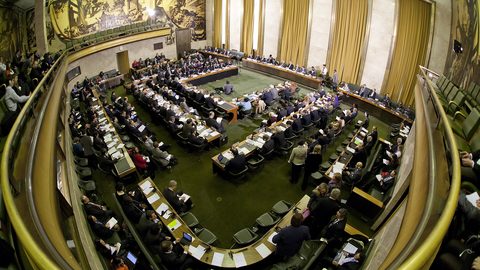
What a delegation needs before applying to HMUN: Harvard procedure, competitive awards, and the moderated caucus system explained.
Harvard Model United Nations
What a delegation needs before applying to HMUN: Harvard procedure, competitive awards, and the moderated caucus system explained.
-
 Harvard National Model United Nations
HNMUN is the university-level Harvard conference, routinely confused with HMUN. The distinction in delegate age, application, and committee depth explained.
Harvard National Model United Nations
HNMUN is the university-level Harvard conference, routinely confused with HMUN. The distinction in delegate age, application, and committee depth explained.
-
 London International Model United Nations
LIMUN accepts individual delegates readily, which changes everything for applicants without a university MUN society. How solo registration shapes the conference.
London International Model United Nations
LIMUN accepts individual delegates readily, which changes everything for applicants without a university MUN society. How solo registration shapes the conference.
-
 National Model United Nations
What NMUN's sessions at UN Headquarters in New York actually mean for a delegate—and what they do not. The university-level pedagogical conference explained.
National Model United Nations
What NMUN's sessions at UN Headquarters in New York actually mean for a delegate—and what they do not. The university-level pedagogical conference explained.
-
 Oxford International Model United Nations
OxIMUN and LIMUN are cross-shopped constantly. The practical differences in registration, committee size, and Oxford vs. London logistics compared.
Oxford International Model United Nations
OxIMUN and LIMUN are cross-shopped constantly. The practical differences in registration, committee size, and Oxford vs. London logistics compared.
-
 THIMUN The Hague
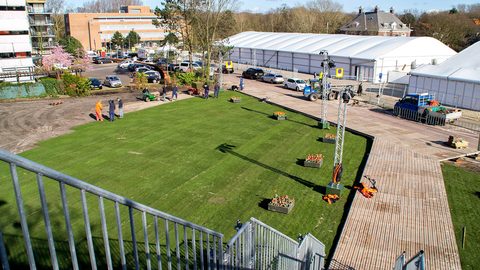
How THIMUN The Hague works: the definitive THIMUN procedure conference with delegation-only registration and consensus-driven resolution-building.
THIMUN The Hague
How THIMUN The Hague works: the definitive THIMUN procedure conference with delegation-only registration and consensus-driven resolution-building.
-
 WorldMUN
's rotating host city makes it the most internationally mixed university conference and the most expensive to attend. What the rotation means for delegates.
WorldMUN
WorldMUN's rotating host city makes it the most internationally mixed university conference and the most expensive to attend. What the rotation means for delegates.
Common Questions
What is the difference between THIMUN and Harvard procedure?
THIMUN procedure has no moderated caucus. Debate runs through a formal speakers list, and resolutions are built through lobbying and merging working papers. Harvard procedure uses moderated caucus and unmoderated caucus as primary modes. Delegates motion between them. If a conference allows a motion for a moderated caucus, it is Harvard style.
Can I attend a school-level conference without a school delegation?
Almost no secondary school conference accepts individual delegate registration. HMUN, NAIMUN, YMUN, and MUNUC all require a school delegation with a faculty advisor. If your school does not have a MUN club, look for university-level conferences that accept individual delegates, such as LIMUN, PIMUN, or RomeMUN.
Which conference is best for a first-time delegate?
A first-time delegate should attend a conference with small committees, a known procedure family, and a tight age range. YMUN runs smaller committees than HMUN or NAIMUN. For university delegates, LIMUN accepts individuals and has a strong delegate development focus.
What is a crisis committee?
A crisis committee simulates a fictional scenario where delegates represent individuals rather than states. Instead of writing resolutions, delegates produce directives, short action orders responding to real-time updates from the dais. The pace is faster and the negotiating style is more aggressive than a General Assembly committee.
How are awards actually decided?
Published rubrics exist but in practice dais visibility and bloc leadership dominate. A delegate who leads a bloc, drafts the resolution, and negotiates mergers wins. A quiet delegate with a strong position paper rarely wins. The gap between stated criteria and actual drivers is largest at conferences over 2,000 delegates.
What is a bloc?
A bloc is an ad-hoc coalition of delegations that forms during unmoderated caucus or lobbying to write a draft resolution together. In a General Assembly committee, a delegate without a bloc cannot pass a resolution. The bloc is the fundamental political unit of a committee.
What is a position paper, and is it required?
A position paper is a pre-conference document stating a delegation's stance on each agenda item. It covers topic background, past international action, country policy, and proposed solutions. Some conferences require it for award eligibility. At large conferences, many position papers are skimmed or checked only for completion.
Read next
-
 MUN Conference Safety: Safeguarding, Travel, and Supervision Responsibilities
A practical guide to safeguarding, travel, and supervision responsibilities for schools and universities sending delegations to MUN conferences abroad.
MUN Conference Safety: Safeguarding, Travel, and Supervision Responsibilities
A practical guide to safeguarding, travel, and supervision responsibilities for schools and universities sending delegations to MUN conferences abroad.
-
 How to Identify MUN Rules of Procedure: THIMUN vs Harvard-Style
A side-by-side guide to identifying whether a conference runs THIMUN or Harvard-style procedure, with a diagnostic question any delegate can apply.
How to Identify MUN Rules of Procedure: THIMUN vs Harvard-Style
A side-by-side guide to identifying whether a conference runs THIMUN or Harvard-style procedure, with a diagnostic question any delegate can apply.
-
THIMUN The Hague
How THIMUN The Hague works: the definitive THIMUN procedure conference with delegation-only registration and consensus-driven resolution-building.
-
London International Model United Nations
LIMUN accepts individual delegates readily, which changes everything for applicants without a university MUN society. How solo registration shapes the conference.
-
Berlin Model United Nations
BERMUN is a THIMUN-affiliated school-level conference in Berlin where procedure is driven by formal speakers' lists and lobbying, not moderated caucus.
-
Harvard Model United Nations
What a delegation needs before applying to HMUN: Harvard procedure, competitive awards, and the moderated caucus system explained.
-
National Model United Nations
What NMUN's sessions at UN Headquarters in New York actually mean for a delegate—and what they do not. The university-level pedagogical conference explained.
-
WorldMUN
WorldMUN's rotating host city makes it the most internationally mixed university conference and the most expensive to attend. What the rotation means for delegates.
-
 HMUN vs HNMUN: The Difference Between Harvard's Two MUN Conferences
HMUN is Harvard's high school MUN conference in Boston; HNMUN is its university-level counterpart. Applying to the wrong one wastes an application cycle.
HMUN vs HNMUN: The Difference Between Harvard's Two MUN Conferences
HMUN is Harvard's high school MUN conference in Boston; HNMUN is its university-level counterpart. Applying to the wrong one wastes an application cycle.