Model UN Speaking, Negotiation and Bloc-Building Guides
The hub for MUN speaking and negotiation guides, routing delegates by what they need to do and linking to concrete scripts and practice steps for every speech type.
MUN Speaking and Negotiation: Scripts and Practice Steps for Every Speech Type
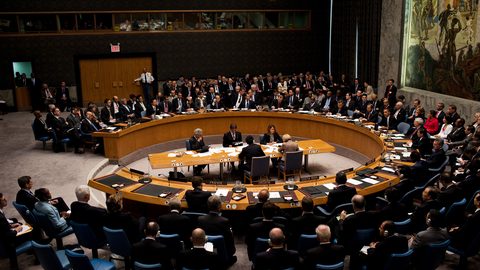
The most common mistake in Model UN speaking is treating it as a test of geopolitical knowledge. It is not. MUN is a debate sport wrapped in diplomatic theatre. The committee room rewards procedural fluency, coalition-building under artificial time pressure, and the ability to deliver a structured speech on demand. Knowing your country's position matters. Knowing how to move that position through a room of 150 other representatives who all want the same floor time matters more. This hub owns the overview for the speaking section of the site. Every page beneath it gives concrete scripts and practice steps, not theory. Need to make a first impression in the first committee session? Start with the opening speech guide. Have 60 seconds to make one point in a moderated caucus? Go to the 60-second speech guide. If the chair has just called an unmoderated caucus and you need allies, the negotiation guide covers what to say.

.jpg)
- Core Terms You Need Before Any Speech: Placard: The sign you raise to signal the chair you want the floor. Dais: The front table where the chair, vice-chair and committee staff sit. Floor: The speaking position once the chair recognises you. Yielding time: What happens when you finish speaking before your allotted time expires. Speakers list: The queue of representatives waiting to speak, maintained by the dais.
- The Two Major Rules Systems: THIMUN procedure (from The Hague International Model UN, founded 1968) uses a lobbying-to-consensus model where resolutions are merged before debate and awards are not given. Harvard procedure (from HMUN, founded 1953) uses competing resolutions, frequent amendments, and awards for top performers. The child pages assume you know which system your conference uses.
- What This Section Covers: Opening speeches, moderated caucus speeches, unmoderated caucus negotiation scripts, resolution defence and amendment speeches, crisis committee statements, and the practice steps that turn a script into a delivery that sounds natural under the lights.
MUN Public Speaking Practice: What Separates a Speech That Works from One That Gets Forgotten
A participant who walks into a committee room with a memorised opening speech but no ability to adapt when the debate shifts direction has over-prepared in the wrong dimension. The gap between stated criteria and actual awards is wide. Floor presence and chair rapport consistently outweigh research quality in competitive conferences. That does not mean skip the research. It means the research exists to support the speech, not replace it.
Delivery Pacing and the Timer
Every conference allocates speaking time, and the default is rarely what you practiced with. THIMUN committees set 60 to 120 seconds for opening speeches. Harvard moderated caucuses run 30 to 60 seconds per speaker. The first practice step: write a 60-second version and a 90-second version of your core argument, then time yourself speaking them aloud. Speakers speed up under pressure and run out of content in the final stretch. The fix is not to write more. It is to build in a deliberate pause after your first operative point and a slower pace on your call to action.
Floor Recognition and the Placard
Getting the chair to call your name is not random. In a large General Assembly body, the chair scans the room and picks representatives who have their placard raised at the right shoulder height, not waving it, and who make eye contact. Raise your placard as soon as the previous speaker yields the floor, hold it steady, and lower it only after the chair acknowledges you. A placard that stays up past recognition irritates the dais. A placard that goes up late looks passive. Practice this with a timer and a partner who acts as chair until the motion becomes instinctive.
MUN Speech Scripts: How to Write for the Three Speech Types You Will Deliver Every Committee
Every speech in MUN answers one question: what does this room need to hear right now to move your agenda forward. The same content delivered as an opening speech, a moderated caucus intervention, and a resolution defence will fail in two of the three formats because the audience and the time constraint are different. Scripts must be format-specific.
The Opening Speech Script
This is the only speech you prepare before committee. It sets your country's policy frame for the entire debate. A standard opening speech runs 90 seconds and follows three beats: acknowledge the topic and the committee's urgency, state your country's position with one concrete policy example, and end with a call for collaboration that signals you are open to bloc formation. Do not list every operative point you plan to pursue. The opening speech exists to make other participants want to talk to you, not to win a policy debate on day one.
The Moderated Caucus Intervention Script
You have 30 to 60 seconds and the room is already debating a specific sub-topic. Your script has two sentences of context maximum, then your position on that sub-topic, then a direct appeal to another bloc or country by name. The appeal is what gets noted by the chair. A generic 'all delegations should support this' lands nowhere. A directed 'the representative of Senegal invites the African bloc to co-sponsor the operative clause on education funding' forces a response and keeps you in the narrative.
The Unmoderated Caucus Negotiation Script
This is not a speech. It is a conversation, and the most common failure mode is treating it like one. In an unmoderated caucus you move to other participants, introduce yourself with your country and your bloc preference, and make a specific offer within the first 30 seconds. 'We share a position on operative clause 3 and we have two signatories already. If you join, you get a co-sponsor slot on the draft resolution.' That is the script. Vagueness gets you excluded from the resolution entirely.
MUN Negotiation Tactics: Bloc Formation, Coalition-Building and the Small-State Strategy
Negotiation in MUN is not about convincing everyone. It is about building a voting bloc large enough to pass your resolution or block the one you oppose. In a Harvard-style committee you need a simple majority of members present and voting. You cannot win every representative one at a time. You win the chairs of the three largest blocs, and they bring their members.
Bloc Formation in the First Unmoderated Caucus
The first unmoderated caucus of any session determines who writes the resolutions and who gets left out. Move to the representatives whose countries share your region, trade bloc, or political alignment. Do not approach the largest delegation first. Approach the mid-size delegations that have not yet been recruited. If you secure three co-sponsors from different regions before the large bloc consolidates, you become a faction leader rather than a follower. The small-state strategy works here: a participant from a country with no geopolitical weight in the real world can hold disproportionate influence in the room by being the first to organise.
Coalition-Building Across Blocs
Once you have a base bloc, you need cross-bloc allies to reach a majority. The negotiation script for this phase: find what the other bloc's resolution includes that yours does not, and offer a merged operative clause that keeps your core language intact while adding theirs. The compromise is not a sign of weakness. In THIMUN procedure, resolution merger failure is a common failure mode that produces no committee output at all. A representative who can merge two resolutions without losing their bloc's loyalty is the one the chair remembers at awards time.
MUN Speech Structure: Yielding, Points of Information and the Speakers List
The mechanics of speaking in committee are not intuitive. Procedural error is the fastest way to lose floor time. Every speech ends with a yield, and your choice of yield determines whether you stay in control or hand the floor to someone who will attack your position.
Three Yield Options and When to Use Them
Yielding to the chair ends your speaking time and returns control to the dais. Use this when you have no time left and no question you want to answer. Yielding to another representative lets you pass your remaining time to a specific colleague, which is a coalition-building move: you signal trust and give your ally floor time they did not earn on the speakers list. Yielding to points of information opens you to questions from the room. Use this only when you are confident your position withstands challenge and you have enough time left to answer at least two questions. A speaker who yields to points of information and cannot answer the first question loses credibility for the rest of the session.
The Speakers List: Getting On and Staying On
The general speakers list opens at the start of committee and fills quickly. Submit your placard to the dais in writing or by raising it during the motion to open the list. Once on the list, you speak in order. If you want to speak on a sub-topic that is not the current agenda item, you must motion for a moderated caucus on that sub-topic. Do not wait for the general speakers list to cycle back to you. By the time it does, the room will be debating a different draft resolution and your prepared remarks will be obsolete.
How To Speak In MUN Committee: Practice Steps That Turn a Script Into a Performance
The gap between a well-written script and a speech that wins the floor is practice delivery under realistic conditions. Chair rapport and floor presence outweigh research quality in award decisions, particularly at conferences using Harvard procedure where awards are competitive. The following steps give you a repeatable process.
Step One: Write to the Timer, Not the Text
Write a 90-second version and a 60-second version of your opening speech. Record yourself reading both at a normal pace. Most speakers take longer than they expect when they add pauses and emphasis. If your 90-second script runs long when delivered, cut the last clause, not the middle. Losing the ending loses the call to action.
Step Two: Practice Placard Timing
Set a timer for 30 seconds. Have a partner say 'the chair recognises the representative of Finland'. Practice the sequence: placard up at second one, lower placard on recognition, stand, wait for the chair's nod, begin speaking. Repeat until the transition takes under three seconds. A three-second delay between recognition and speech start loses the room's attention.
Step Three: Run a Mock Unmoderated Caucus
With three other participants, simulate the first unmoderated caucus. Each person has a different policy position. Your objective is to form a bloc of two within three minutes. Use the script: introduce yourself with country and bloc preference, make one specific offer, and secure a commitment. If you cannot get a yes in three minutes, your offer is too vague.
Step Four: Handle a Hostile Point of Information
Have a partner prepare a question that challenges your country's position. Deliver your opening speech, yield to points of information, and answer. The practice goal is not to win the argument. It is to answer without taking a defensive tone and to return to your operative clause within two sentences. A defensive speaker loses the floor. A speaker who answers briefly and pivots back to their policy retains control.
What This Section Does Not Cover and Where To Start
This hub routes you to the right child guide based on what you need to do next. If your first committee session is tomorrow and you have never given an opening speech, go to the opening speech guide. If you have an unmoderated caucus in 15 minutes and no allies, the negotiation guide has the exact script for approaching the first person. If you are in a crisis committee and the chair just dropped a new development, the crisis committee speech guide covers directives and personal statements. The honest caveat: every speech you deliver will be interrupted, derailed, or rendered irrelevant by a procedural motion. The skill that separates award-winning participants from the rest is not the quality of any single speech. It is the ability to write a new one in 60 seconds while the room waits for your placard.
More in Speaking and negotiation
-
 Building a bloc
How to build an MUN negotiating bloc based on policy overlap rather than friendship, including a method for identifying allies from opening speeches and structuring a sponsor core.
Building a bloc
How to build an MUN negotiating bloc based on policy overlap rather than friendship, including a method for identifying allies from opening speeches and structuring a sponsor core.
-
 Negotiating in unmoderated caucus
Concrete scripts and opening lines for negotiating during unmoderated caucus in MUN, covering how to find policy overlap, form a bloc, and trade clauses for sponsor support.
Negotiating in unmoderated caucus
Concrete scripts and opening lines for negotiating during unmoderated caucus in MUN, covering how to find policy overlap, form a bloc, and trade clauses for sponsor support.
-
 The opening speech
A timed structure and delivery guide for the MUN opening speech, showing how to frame a country's policy in 60-90 seconds without reading the position paper aloud.
The opening speech
A timed structure and delivery guide for the MUN opening speech, showing how to frame a country's policy in 60-90 seconds without reading the position paper aloud.
-
 Writing a 60-second speech
How to write a 60-second MUN moderated caucus speech with one argument and one call to action, including a before-and-after example of cutting filler to make a single point well.
Writing a 60-second speech
How to write a 60-second MUN moderated caucus speech with one argument and one call to action, including a before-and-after example of cutting filler to make a single point well.
Common Questions
How do I get the chair to recognise me first in a large committee?
Sit in the front third of the room, keep your placard at shoulder height from the moment the preceding speaker starts, and make eye contact with the chair. Waving your placard or calling out is counterproductive. The chair scans the front rows first because those participants are visible and engaged.
What should I do if my prepared opening speech becomes irrelevant before I deliver it?
Abandon it on the spot. Do not read a script that does not match the committee's direction. Use the general speakers list to deliver a 60-second version that acknowledges the new debate direction and anchors your country position to it. The dais notices flexibility more than it notices a polished speech that ignores the room.
How many times should I speak in a single committee session?
Twice in the first session, three to four times in each subsequent session. Speaking once makes you invisible. Speaking more than five times per session risks exhausting the chair's patience and making you look like you are dominating the floor rather than contributing to the debate.
What is the correct way to address another participant during a speech?
Use third person: 'the representative of India' not 'you in the back row'. First-person address is considered undiplomatic and can provoke a point of order in some committees. The sole exception is during unmoderated caucus, where direct address is normal.
Can I read an entire speech from notes?
Yes, and most participants do. The chair cares about content and pacing, not whether you memorised the text. What reads as amateur is reading word for word without looking up. Write your speech in short phrases on a note card, not full sentences, so you can glance at the card and then address the room.
How do I handle a point of information I cannot answer?
Do not bluff. Say 'the representative does not have that information at this time and will yield the floor' and sit down. A brief, honest yield protects your credibility more than a fabricated statistic that another participant corrects in the same session.
What if I am assigned a double delegation and my partner is unprepared?
Divide speaking roles by agenda item before the first session. You take the first two speeches, your partner takes the third and fourth. If they are not ready, you deliver all the floor speeches and let them handle note-passing and bloc contact during unmoderated caucus. The chair sees the delegation as one unit and will not penalise you for an unprepared partner if the total output is consistent.
Read next
-
Building a bloc
How to build an MUN negotiating bloc based on policy overlap rather than friendship, including a method for identifying allies from opening speeches and structuring a sponsor core.
-
Negotiating in unmoderated caucus
Concrete scripts and opening lines for negotiating during unmoderated caucus in MUN, covering how to find policy overlap, form a bloc, and trade clauses for sponsor support.
-
Writing a 60-second speech
How to write a 60-second MUN moderated caucus speech with one argument and one call to action, including a before-and-after example of cutting filler to make a single point well.
-
The opening speech
A timed structure and delivery guide for the MUN opening speech, showing how to frame a country's policy in 60-90 seconds without reading the position paper aloud.
-
 THIMUN Procedure vs Harvard Parliamentary Procedure: What a Delegate Does Differently
A delegate-facing comparison of THIMUN and Harvard parliamentary procedure, covering speaking, document-building, and coalition-forming differences.
THIMUN Procedure vs Harvard Parliamentary Procedure: What a Delegate Does Differently
A delegate-facing comparison of THIMUN and Harvard parliamentary procedure, covering speaking, document-building, and coalition-forming differences.
-
 HMUN vs HNMUN: The Difference Between Harvard's Two MUN Conferences
HMUN is Harvard's high school MUN conference in Boston; HNMUN is its university-level counterpart. Applying to the wrong one wastes an application cycle.
HMUN vs HNMUN: The Difference Between Harvard's Two MUN Conferences
HMUN is Harvard's high school MUN conference in Boston; HNMUN is its university-level counterpart. Applying to the wrong one wastes an application cycle.
-
 LIMUN vs OxIMUN: Comparing the UK's Two Largest University MUN Conferences
LIMUN and OxIMUN are the UK's two largest university MUN conferences. The practical difference is the admission route for a delegate without a society.
LIMUN vs OxIMUN: Comparing the UK's Two Largest University MUN Conferences
LIMUN and OxIMUN are the UK's two largest university MUN conferences. The practical difference is the admission route for a delegate without a society.
-
 Best MUN Conferences for a First Conference, Ranked on Survivability
MUN conferences ranked on what makes them survivable for a first-time delegate—beginner committees, published rules, and realistic applications—not on prestige.
Best MUN Conferences for a First Conference, Ranked on Survivability
MUN conferences ranked on what makes them survivable for a first-time delegate—beginner committees, published rules, and realistic applications—not on prestige.