Model United Nations Rules of Procedure and How They Govern Debate
How THIMUN and Harvard-style procedure differ, and why knowing the distinction before you enter the committee room determines whether you can participate.
Model United Nations Rules of Procedure and How They Govern Debate
You have been assigned a country and a committee. You have written a position paper. Now you sit down in a room with 150 other participants, a chair calls the session to order, and you have no idea what happens next. The difference between a productive weekend and four days of silent confusion is whether you know which rule system the committee is running. Model United Nations is not a test of geopolitical knowledge; it is a debate sport with diplomatic theatre, and the rules of procedure are the game mechanics.
The fundamental divide in global MUN practice is whether a committee uses THIMUN consensus procedure or Harvard competitive procedure. Walk in without knowing which one governs the room and you cannot function. Every rule explained in the pages that follow names the rule, shows how it differs between THIMUN and Harvard-style families, and gives a worked example. Find the question you actually need answered, then follow the link to the child page that owns the detail.
The MUN procedural frameworks that govern any committee session are not a single international standard. They are a family of systems with two dominant branches, and the conference you attend will use one or the other. Know which one before you register.
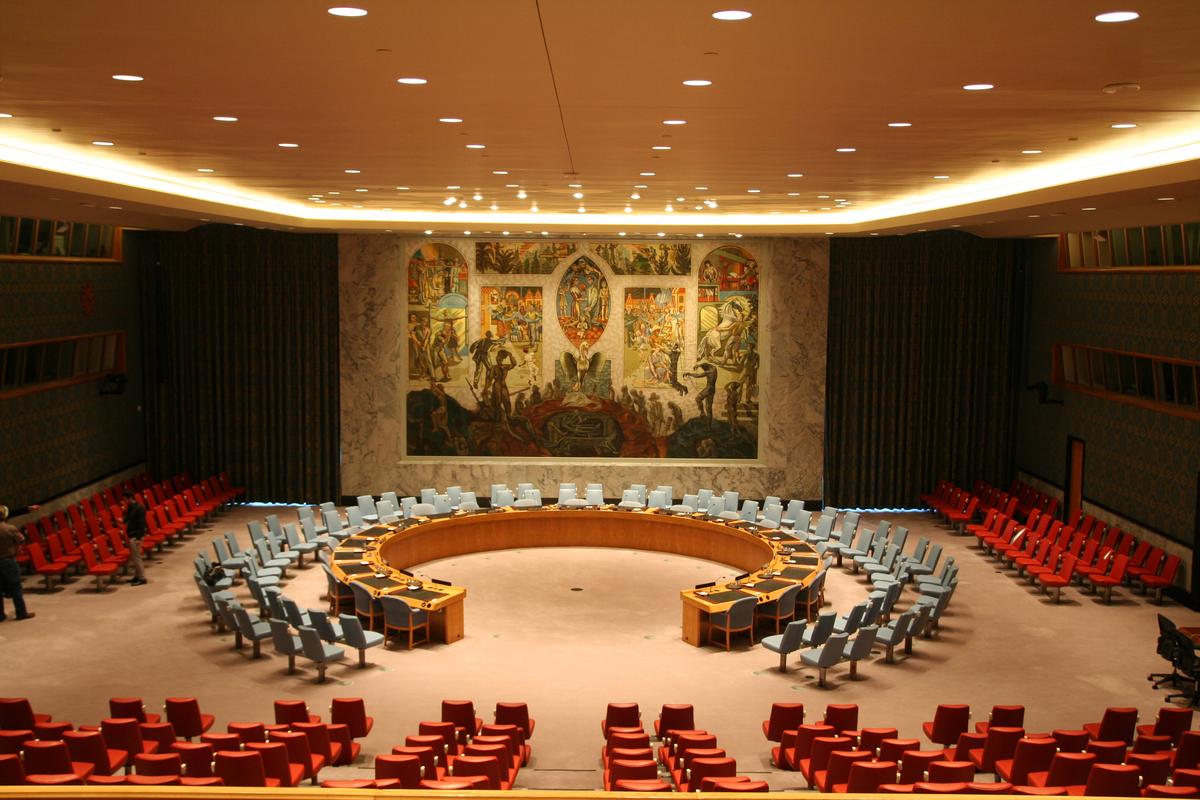

- THIMUN Procedure Origin: The Hague International Model United Nations, first used 1968. Governing body: THIMUN Foundation, The Hague, Netherlands.
- Harvard Procedure Origin: Harvard Model United Nations, first conference 1953. Governing body: Harvard International Relations Council, Cambridge, Massachusetts, USA.
- Core Structural Difference: THIMUN uses a formal lobbying phase to merge resolutions into a single consensus document. Harvard-style uses moderated and unmoderated caucuses to develop multiple competing resolutions.
- Resolution Output: THIMUN: one resolution per topic, voted on by the committee. Harvard: multiple competing resolutions per topic, voted on sequentially.
- Amendment Process: THIMUN: amendments submitted in writing to an approval panel, only operative clauses can be amended. Harvard: amendments introduced from the floor, both friendly and unfriendly.
THIMUN Procedure Guide: How Consensus Debate Works
THIMUN procedure is built on a single premise: a Model United Nations committee should produce one resolution that represents the consensus of the room. The process is linear, predictable, and designed to prevent procedural gamesmanship from overwhelming substantive debate.
The Lobbying Phase
Before any formal debate begins, a THIMUN committee enters a lobbying phase. Participants circulate, form blocs, and negotiate the content of a single working paper. The chair does not moderate this period; you move freely and talk to one another. Lobbying time is allocated as a percentage of total committee time, and at THIMUN conferences it accounts for a substantial portion of the first session. Arrive having identified potential bloc partners, or spend the first hours catching up while organised blocs are already drafting.
Resolution Authorship and Merger
THIMUN uses a main-submitter and co-submitter system. There is no sponsors list as in Harvard procedure. The goal during lobbying is for two or more blocs to merge their working papers into a single resolution acceptable to the majority of the room. If two blocs refuse to merge, neither resolution may pass, and the committee can produce no output. This merger failure is the single most common cause of committee collapse in THIMUN procedure, and it is almost always the result of personality conflict rather than policy disagreement.
Formal Debate and the Speakers List
Once a single resolution is introduced, debate proceeds through a permanent speakers list. The chair recognises speakers in order. Each speaks for a set time and may yield remaining time to another speaker, to the chair, or to questions. THIMUN does not use the moderated caucus format that defines Harvard-style debate. There is no unmoderated caucus either. The entire debate is formal, and the chair's role is to enforce speaking order and rule on points of order and points of personal privilege.
Amendments and Voting
Amendments in THIMUN procedure are submitted in writing to an approval panel, not introduced from the floor. Only operative clauses may be amended, and there is no concept of a friendly amendment as used in Harvard procedure. Voting is by placard. A simple majority of members present and voting is required to pass the resolution. Quorum is one-third of committee membership. The goal is passage, not competition, and the award structure at THIMUN conferences reflects this: recognition goes to those who facilitated consensus, not to those who outmanoeuvred opponents.
The THIMUN Foundation publishes its rules of procedure online, and the 2023 revision is the current version. Read the full document before arrival if you are attending a THIMUN-affiliated conference. The chair will enforce it strictly, and procedural ignorance is not treated as a learning opportunity.
Harvard Procedure MUN: How Competitive Debate Works
Harvard-style procedure treats the committee as a competitive environment where multiple resolutions compete for passage and awards go to those who demonstrate superior speaking, negotiation, and procedural skill. The system is built around caucuses, not a single lobbying phase.
The Caucus System
Harvard-style debate divides committee time into three formats. Formal debate uses a speakers list for general discussion of the topic. Moderated caucus allows the chair to recognise speakers on a specific sub-topic, with a set speaking time per person, and is the primary vehicle for focused debate. Unmoderated caucus suspends formal debate entirely; you move around the room to negotiate, draft working papers, and build coalitions. The chair sets the duration of each caucus. Use unmoderated time to find a bloc, or you will end up authoring a resolution with no co-sponsors.
Resolution Authorship and Competition
Harvard-style procedure uses a sponsors and signatories system. Sponsors must vote in favour of the resolution; signatories simply endorse it for debate. Multiple resolutions on the same topic may be introduced simultaneously. The committee debates each in turn, then votes on them in order of introduction. If one resolution passes, the others are not voted on. This creates a strategic dynamic where blocs may coordinate voting against a stronger resolution to clear the path for their own.
Amendment Process
Amendments in Harvard-style procedure are introduced from the floor. A friendly amendment is one accepted by all sponsors and does not require a vote. An unfriendly amendment requires a vote by the committee. This distinction causes more procedural confusion than any other rule in MUN. Participants frequently mistake a friendly amendment as something that must be accepted, when a single sponsor may object and force a vote. The Harvard International Relations Council publishes its rules annually, and the 2024 version is the current governing document for HMUN and its affiliated conferences.
Voting and Awards
Voting is by placard. A simple majority of members present and voting is required. Quorum is one-third of committee membership. Awards are competitive. Categories range from Best Delegate through Honourable Mention to Verbal Commendation. The chair awards the gavel to the Best Delegate. Where award criteria are published, diplomacy, negotiation, speaking ability, knowledge of topic, and resolution contribution are the stated factors. In practice, floor presence and chair rapport carry more weight than the rubrics suggest. Prioritise speaking time over research quality.
How MUN Debate Works: What Actually Happens in Committee
Regardless of which procedural family a conference uses, every committee session follows a predictable sequence. Understanding this sequence is the single best investment a new participant can make.
Roll Call and Quorum
The chair calls the committee to order and conducts roll call. Respond with "present" or "present and voting". The latter commits you to vote on all substantive motions; you cannot abstain. Once quorum is established, the chair moves to the agenda. Some conferences have a pre-set agenda; others require a motion to set it.
General Speakers List
Both THIMUN and Harvard-style committees open a general speakers list. Speakers state their country's position on the topic, for a set time of 90 seconds to two minutes. In THIMUN procedure, this list remains open for the duration of formal debate. In Harvard-style, the chair may close it to move to caucuses.
Caucus and Lobbying
This is where the procedural families diverge. In a Harvard-style committee, motion for a moderated caucus on a specific sub-topic or for an unmoderated caucus for bloc formation. The chair asks for seconds, takes no objections, and sets the time. In a THIMUN committee, the lobbying phase is built into the schedule and does not require a motion. Understand which format your conference uses, or you will either miss the chance to speak in caucus or waste time waiting for a motion that will never come.
Resolution Introduction and Debate
Working papers are submitted to the dais, approved for formatting, and assigned a resolution number. In THIMUN, one resolution is debated. In Harvard-style, multiple resolutions are debated sequentially. The committee discusses operative clauses, takes amendments, and votes.
Voting Procedure
Move into voting procedure by motion. This motion requires a second and passes by simple majority. Once voting procedure begins, no one may enter or leave the room. Vote by placard or by roll call if requested. The chair announces the outcome. In THIMUN, that is the end of the topic. In Harvard-style, the next resolution is debated or the committee moves to the next agenda item.
How THIMUN and Harvard Procedure Differ: A Comparison
The table below distinguishes the two procedural families. Every figure in it comes from the rules documents published by the THIMUN Foundation and the Harvard International Relations Council. The 2023 and 2024 revisions are the current versions respectively. Memorise these differences before a conference and you will not experience procedural freeze on the first day.
THIMUN uses a permanent speakers list with yields. Harvard-style uses a separate speakers list per topic plus moderated caucus. THIMUN permits one resolution per topic voted on. Harvard-style permits multiple competing resolutions. THIMUN amendments are submitted in writing to an approval panel and only operative clauses may be amended. Harvard-style amendments are introduced from the floor and both friendly and unfriendly types exist. THIMUN has no unmoderated caucus. Harvard-style uses unmoderated caucus as the primary negotiation vehicle. THIMUN awards consensus facilitation. Harvard-style awards competitive performance.
The most practical difference is the amendment process. In a THIMUN committee, you cannot introduce a friendly amendment from the floor. In a Harvard-style committee, you cannot submit an amendment in writing to a panel. Each system has a different procedure for modifying a resolution, and using the wrong one will get your amendment ruled out of order.
MUN Parliamentary Procedure: The Motion System and Points
Both THIMUN and Harvard-style committees use the same basic set of motions and points, though the order of precedence and the chair's discretion vary. The following is the motion hierarchy that governs every committee session.
Motion to Set the Agenda
Made at the start of committee when multiple agenda items exist. Requires a second and a simple majority. In a single-item committee, this motion is unnecessary.
Motion for a Moderated Caucus
Harvard-style only. Specifies the sub-topic, speaking time, and total duration. Requires a second and is voted on by the committee. The chair may rule it dilatory if the topic is not relevant to the agenda item.
Motion for an Unmoderated Caucus
Harvard-style only. Specifies the duration. Requires a second and a majority vote. Used for bloc formation, resolution drafting, and informal negotiation.
Motion to Introduce a Resolution
Once a working paper has been approved by the dais, move to introduce it. The chair reads the resolution number and sponsors, and debate begins.
Motion to Move Into Voting Procedure
Closes debate on the current resolution and moves the committee to vote. Requires a second and a two-thirds majority in some variants. Once granted, no further amendments or speakers are allowed.
Points
A point of order is raised when you believe the chair has made a procedural error. The chair rules immediately. A point of personal privilege concerns your comfort, such as audibility or temperature. A point of parliamentary inquiry is a question about the rules of procedure. The chair answers or defers to the dais. Points of parliamentary inquiry are the most commonly abused motion in MUN; they are meant to clarify procedure, not to stall debate or make a speech. Chairs at major conferences tolerate approximately one such inquiry per session before ruling subsequent ones dilatory.
MUN Rules of Procedure: The One Question This Section Answers
The question this section answers is: how do THIMUN and Harvard-style MUN procedures differ, and which governs how a committee actually runs? The answer is that both govern a committee, but they govern it differently, and the conference you attend will use one or the other. There is no universal MUN parliamentary procedure. There are two dominant families, and a third variant at NMUN that blends elements of both. Prepare for a THIMUN committee using Harvard-style rules and you will be unable to function during the lobbying phase. Prepare for a Harvard-style committee using THIMUN rules and you will be unable to motion for a moderated caucus, spending the first session expecting a speakers list that never opens for the topic.
Route yourself to the child page that answers your specific question. If you need to understand the motion system and how to make a motion that the chair will recognise, that is the motion system guide. If you need to understand voting procedure, including division of the question and voting bloc strategy, that is the voting guide. If you need to navigate caucuses in a Harvard-style committee or lobbying in a THIMUN committee, that is the caucus and lobbying guide. This section is the map. The detail lives in the pages it points to.
More in Rules of procedure
-
 Moderated vs unmoderated caucus
How moderated and unmoderated caucuses run in MUN, how each serves a different strategic purpose, and how the distinction changes under THIMUN procedure.
Moderated vs unmoderated caucus
How moderated and unmoderated caucuses run in MUN, how each serves a different strategic purpose, and how the distinction changes under THIMUN procedure.
-
 MUN motions explained
The common MUN motions, what each one does, when to raise it, and how the motion sequence differs between THIMUN consensus and Harvard competitive procedure.
MUN motions explained
The common MUN motions, what each one does, when to raise it, and how the motion sequence differs between THIMUN consensus and Harvard competitive procedure.
-
 Points of order, information and personal privilege
When to raise a point of order, parliamentary inquiry, or personal privilege in MUN, how each differs, and what the chair will rule.
Points of order, information and personal privilege
When to raise a point of order, parliamentary inquiry, or personal privilege in MUN, how each differs, and what the chair will rule.
-
 The speakers list
How the MUN speakers list determines speaking order, the rules for yielding time to another delegate or to questions, and why the list matters strategically.
The speakers list
How the MUN speakers list determines speaking order, the rules for yielding time to another delegate or to questions, and why the list matters strategically.
-
 Voting procedure
How MUN voting procedure works, including simple and two-thirds majorities, roll call votes, abstentions, and how voting differs under THIMUN consensus rules.
Voting procedure
How MUN voting procedure works, including simple and two-thirds majorities, roll call votes, abstentions, and how voting differs under THIMUN consensus rules.
Common Questions
How do I know which procedure a conference uses before I register?
Check the conference website for the rules of procedure document. If the document is titled "THIMUN Rules of Procedure" and references a lobbying phase, the conference runs THIMUN-style. If it references moderated and unmoderated caucuses, it runs Harvard-style. If no document is published, email the secretariat. A conference that cannot tell you which procedure it uses is one to treat with caution.
Can I switch between THIMUN and Harvard procedure during a single committee session?
No. The chair runs the committee according to a single published procedure. Switching mid-session would require a motion to suspend the rules, which is not standard practice at either THIMUN or Harvard-style conferences. Crisis committees may operate under modified rules, but they are a distinct format, not a hybrid of the two standard families.
Which procedure is easier for a first-time participant?
THIMUN procedure is simpler to follow because the sequence is linear and there are fewer motion types. A first-timer in a THIMUN committee needs to understand lobbying, the speakers list, and voting. A first-timer in a Harvard-style committee must also understand moderated caucus motions, unmoderated caucus motions, and the friendly versus unfriendly amendment distinction. However, THIMUN procedure punishes those who do not lobby effectively, because someone outside a bloc has no resolution to speak on. Harvard-style gives more opportunities for floor speeches, even to those who are not resolution authors.
Does the chair's training affect how procedure is applied?
Yes, and the variation is significant. A well-trained chair at a conference with high chair training hours will enforce procedure consistently and explain it when mistakes happen. A poorly trained chair will allow procedural drift, favour certain individuals, or misinterpret rules. Chair quality is the single largest variable in the experience, and it is not reliably predictable from conference reputation. The HMUN chair training programme is considered the gold standard among Harvard-style conferences, but the quality of individual chairs still varies.
What happens if a committee fails to pass a resolution?
In THIMUN procedure, this is a committee failure. The conference may allow the committee to attempt a second resolution, or it may simply move to the next agenda item. In Harvard-style procedure, the committee votes on multiple resolutions sequentially; if the first resolution fails, debate moves to the second. If all resolutions fail, the committee moves on. At conferences where resolution passage affects awards, a committee that produces no output may receive no awards at all, or the chair may give verbal commendations only.
Read next
-
MUN motions explained
The common MUN motions, what each one does, when to raise it, and how the motion sequence differs between THIMUN consensus and Harvard competitive procedure.
-
The speakers list
How the MUN speakers list determines speaking order, the rules for yielding time to another delegate or to questions, and why the list matters strategically.
-
Points of order, information and personal privilege
When to raise a point of order, parliamentary inquiry, or personal privilege in MUN, how each differs, and what the chair will rule.
-
Moderated vs unmoderated caucus
How moderated and unmoderated caucuses run in MUN, how each serves a different strategic purpose, and how the distinction changes under THIMUN procedure.
-
Voting procedure
How MUN voting procedure works, including simple and two-thirds majorities, roll call votes, abstentions, and how voting differs under THIMUN consensus rules.
-
 THIMUN Procedure vs Harvard Parliamentary Procedure: What a Delegate Does Differently
A delegate-facing comparison of THIMUN and Harvard parliamentary procedure, covering speaking, document-building, and coalition-forming differences.
THIMUN Procedure vs Harvard Parliamentary Procedure: What a Delegate Does Differently
A delegate-facing comparison of THIMUN and Harvard parliamentary procedure, covering speaking, document-building, and coalition-forming differences.
-
 HMUN vs HNMUN: The Difference Between Harvard's Two MUN Conferences
HMUN is Harvard's high school MUN conference in Boston; HNMUN is its university-level counterpart. Applying to the wrong one wastes an application cycle.
HMUN vs HNMUN: The Difference Between Harvard's Two MUN Conferences
HMUN is Harvard's high school MUN conference in Boston; HNMUN is its university-level counterpart. Applying to the wrong one wastes an application cycle.
-
 LIMUN vs OxIMUN: Comparing the UK's Two Largest University MUN Conferences
LIMUN and OxIMUN are the UK's two largest university MUN conferences. The practical difference is the admission route for a delegate without a society.
LIMUN vs OxIMUN: Comparing the UK's Two Largest University MUN Conferences
LIMUN and OxIMUN are the UK's two largest university MUN conferences. The practical difference is the admission route for a delegate without a society.
-
 Best MUN Conferences for a First Conference, Ranked on Survivability
MUN conferences ranked on what makes them survivable for a first-time delegate—beginner committees, published rules, and realistic applications—not on prestige.
Best MUN Conferences for a First Conference, Ranked on Survivability
MUN conferences ranked on what makes them survivable for a first-time delegate—beginner committees, published rules, and realistic applications—not on prestige.