How the MUN Security Council Works and Why It Behaves Nothing Like a General Assembly
Fifteen members, five permanent vetoes, and binding resolutions—how the MUN Security Council operates and why it demands different strategy from a GA.
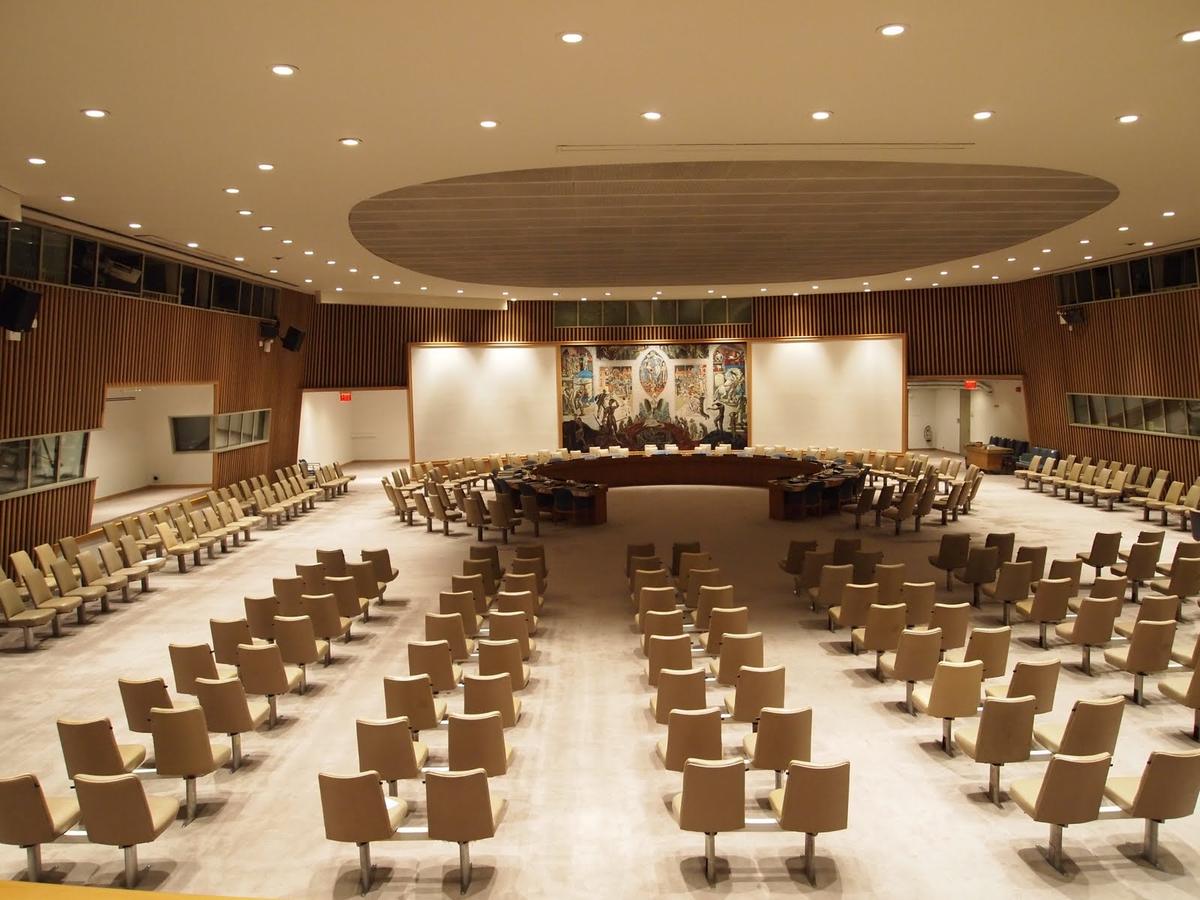

A Delegate from France Just Vetoed Your Resolution
Two hours in unmoderated caucus. Eleven delegations in your bloc. Seven preambulatory clauses, seven operative clauses, including a Chapter VII mandate. The dais calls for the vote. The delegate from France raises a placard and says “veto.” That single word ends the document. In a General Assembly committee, those eleven votes would pass a resolution. In the MUN Security Council, they mean nothing if one of the P5 objects. Here is why the UNSC works that way, and how you survive it.
UNSC MUN Committee Rules: the Structural Difference is the Veto
Five permanent members hold veto power over substantive resolutions. That is the rule that changes everything. In the real UN Charter, Article 27 gives the P5, China, France, Russia, the United Kingdom, and the United States, the right to block any resolution by voting no. Most MUN conferences simulate this rule, though the exact mechanics vary by conference. At Harvard-style conferences such as HMUN, the veto is not exercised by individual delegates in standard procedure; the committee votes on draft resolutions by simple majority with no P5 privilege. At THIMUN-style conferences such as NMUN and THIMUN itself, the veto is also absent in practice. All delegations vote equally. The veto appears most reliably in specialised UNSC simulations. These account for fewer than 10% of conferences and usually appear at university-level invitationals or crisis committees.
The practical consequence is straightforward. A P5 delegate who threatens a veto reshapes negotiation before any document is written. Non-P5 members cannot simply win a majority vote. They must build a coalition that makes a veto politically costly, so the P5 delegate chooses to abstain rather than burn diplomatic capital. That is the core strategic difference between a Security Council committee and a General Assembly committee.
Model UN Security Council Procedure: Two Dominant Rule Families
Harvard-Style Procedure
Harvard-style procedure, used at HMUN, NAIMUN, HMUN India, and WorldMUN, lets delegates motion for a moderated caucus: a structured debate on a specific sub-topic with short speaking times of 60 to 90 seconds. Delegates also use unmoderated caucus to break into blocs and write. The dais sets the agenda by motion and vote during the first session.
THIMUN-Style Procedure
THIMUN-style procedure, used at THIMUN The Hague and NMUN, has no moderated caucus in the Harvard sense. Debate happens through formal speakers’ lists and amendments to working papers that become draft resolutions. Lobbying and merging are the core mechanics. The conference secretariat assigns the agenda, and committees debate topics in a fixed order. If you walk into a THIMUN committee expecting to motion for a moderated caucus, you will spend the first hour confused. Check the conference’s rules of procedure before you arrive.
MUN Security Council Veto Power: What it Actually Means in the Room
The veto is the single most misunderstood mechanic in the activity. New delegates assume it makes P5 members invincible. It does the opposite. A P5 delegate who vetoes every resolution becomes isolated. Other delegations stop sharing drafts with them. Crisis updates bypass them. The dais notes the failure to negotiate. The veto is a threat weapon, not a daily tool. Use it once to protect a core national interest, and the room accepts it. Use it three times, and the bloc will write resolutions designed to force your veto and make you look obstructive.
For non-P5 delegations, the veto means you cannot win through arithmetic. You need ten votes out of fifteen for a simple majority in most conferences, but if even one P5 votes no under a veto rule, those ten votes are irrelevant. Your job is to draft operative clauses the P5 can live with. Phrase sanctions regimes with sunset clauses. Frame Chapter VII authorisations with reporting requirements. Give the P5 off-ramps. A resolution that demands “unconditional withdrawal” of peacekeepers will be vetoed. A resolution that “requests the Secretary-General to assess the viability of withdrawal within 90 days” may pass.
How MUN UNSC Differs from GA: a Practical Comparison
Room Size and Speaking Time
A General Assembly committee at HMUN or NMUN may hold 50 to 200 members. Speaking time is scarce, blocs are large, and a resolution needs a two-thirds majority of those present and voting. A UNSC committee holds 15 to 30 members. Every participant can speak multiple times per session. Blocs are small enough that personal relationships determine outcomes. A GA delegate who is quiet can hide. A UNSC delegate who is quiet is noticed and penalised in awards.
Resolution Language and Consequences
Resolutions in the UNSC are treated as binding under Chapter VII of the UN Charter in most simulations. Chairs instruct delegates to use language like “Determines” and “Demands” rather than “Recommends” or “Calls upon.” This changes the drafting process. Every operative clause has real consequences in the simulation; a clause that authorises military intervention cannot be vague. Delegates spend more time negotiating exact wording in the UNSC than in a GA committee because the text matters more.
Committee Size and Delegate Strategy
UNSC committee size at major conferences ranges from 15 to 30 delegates. University-level conferences such as NMUN and WorldMUN commonly run 15 single-delegate seats or 30 double-delegate seats. School-level conferences such as HMUN and NAIMUN run 15 to 30, occasionally expanding to 60 at large THIMUN-style events. The size determines your strategy. In a 15-person committee, every delegate can hold the floor multiple times per session. The dais remembers who spoke, what they said, and whether they advanced the debate. In a 30-person committee, you compete for speaking time and must make every statement count.
Double-delegation UNSC committees, common at university conferences, change negotiation dynamics. Each country is represented by two delegates who must coordinate their speaking and writing. A double-delegation that argues with itself in unmoderated caucus loses credibility. The strongest double-delegations divide labour: one delegate handles drafting, the other handles negotiation. Switch roles between topics.
Position Paper Requirements and Award Criteria
Most Harvard-style and NMUN conferences require a position paper for the UNSC, submitted two to four weeks before the conference. The format is stable: topic background, past international action, country policy, and proposed solutions. One to two pages per topic. Conferences claim to weight position papers equally with committee performance. In practice, dais visibility and bloc leadership dominate awards. A well-written position paper from a delegate who never speaks rarely wins. The gap between claimed criteria and actual drivers exists because assessing 15 to 30 delegates objectively over a weekend is hard. The dais remembers the delegate who merged three blocs, not the delegate who submitted flawless preambulatory clauses.
At THIMUN, no individual awards exist. THIMUN does not issue Best Delegate or Outstanding Delegate awards. Delegates who want individual recognition should attend Harvard-style or NMUN conferences. At NMUN, awards are delegation-based, outstanding, distinguished, and honourable mention, and position paper scores carry more weight than at HMUN.
Crisis Elements in the Security Council
Crisis elements appear in roughly 40 to 60 percent of university-level UNSC simulations, but in fewer than 20 percent of school-level UNSC committees. A crisis committee introduces real-time updates from crisis staff: a border incident, a humanitarian emergency, a diplomatic cable. Delegates respond with directives rather than resolutions. A directive is a short action order: “Authorise an emergency session of the General Assembly,” “Demand immediate humanitarian access,” “Impose a no-fly zone.”
If your UNSC committee includes crisis, prepare for a faster pace. You will receive updates every 90 to 120 minutes and must respond within 30 minutes. The dais may suspend formal debate to introduce a crisis note. P5 delegates often gain directive powers that let them act unilaterally in crisis, subject to chair discretion. Non-P5 delegates must work through the bloc structure to influence crisis responses. A delegate who ignores the crisis and keeps writing a resolution will be left behind.
Resolution Passage Thresholds and Voting Mechanics
The resolution passage threshold in Harvard-style UNSC committees is a simple majority of those present and voting. Abstentions are not counted. In THIMUN-style committees, the threshold is also a simple majority, with no quorum requirement beyond standard conference rules. If the conference simulates the real UNSC veto, all five P5 must vote in favour or abstain for a resolution to pass. This threshold is used at fewer than 10 percent of conferences, but it transforms negotiation when it appears.
Under a real-veto rule, a P5 abstention counts as a pass. A P5 no vote is a veto. Non-P5 delegates must persuade every P5 member to at least abstain. This makes the Permanent Five the real authors of every resolution that passes. Non-P5 delegates who understand this draft clauses with P5 red lines in mind before they ever approach a bloc partner.
Building a Bloc When You Cannot Win on Votes Alone
The bloc is the fundamental political unit of any MUN committee, but in the Security Council, the bloc must account for the veto. A non-P5 delegate who builds a bloc of eight non-P5 members has a majority. That majority means nothing if a P5 member vetoes. Build a bloc that includes at least two P5 members as signatories. Draft operative clauses that serve the interests of those P5 members. Russia will not sign a clause that names Russian forces. The United States will not sign a clause that unilaterally condemns an ally. China will not sign a clause that mentions Taiwan.
If a P5 member refuses to join your bloc, make the veto politically expensive. Write the resolution so that a veto would isolate the P5 member from the rest of the committee. Use preambulatory clauses that note the P5 member’s past statements. Use operative clauses that offer a compromise: a six-month sanctions renewal instead of a two-year one. A P5 delegate who vetoes a reasonable compromise looks like the obstructionist, not the protector of national interest.
Speaking Time and Floor Strategy for P5 and Non-P5 Delegates
UNSC speaking time in Harvard-style committees is 60 to 90 seconds per speaker in moderated caucus, varying with chair discretion and committee size. In THIMUN-style committees, delegates speak for two to three minutes during the lobbying phase and one minute per clause during debate. P5 delegates: speak early in each session to establish your red lines. If France states in the first moderated caucus that it will veto any resolution without a humanitarian exemption, the bloc knows the constraint and can draft around it. Non-P5 delegates: speak second or third. Respond to the P5 statements and propose compromises.
Do not waste speaking time reciting your country’s general policy. The dais has your position paper. Use every minute to react to what another delegate just said, propose a specific clause change, or offer a deal. A statement that ends with “I invite the delegate of Japan to join my bloc” is worth ten statements that end with “We must uphold international law.”
Note Passing, Dais Relations, and the Reality of Awards
Note passing is permitted in almost all UNSC committees, though chairs may restrict it during formal debate. Use notes to build your bloc, not to gossip. A note that says “Join my bloc on operative clause 3 and I will support your amendment on clause 7” advances your position. A note that complains about the dais does nothing and risks being read aloud if the chair collects notes.
The dais, the chair, co-chair, and rapporteur, controls speaking order, rules on motions, and evaluates performance. This asymmetry is structural. Be professional. Address the chair as “Honourable Chair.” Follow time limits. A delegate who argues with the chair over a ruling loses awards, not the argument. The single most common failure mode in the UNSC is the invisible delegate: someone who attends every session, never speaks, submits no written work, and is forgotten by the dais. Do not be invisible. Speak at least once in every moderated caucus. Submit an amendment. Write a clause. The dais cannot reward a delegate they do not remember.
The Honest Caveat
The hard truth about the MUN Security Council: most conferences do not simulate the veto at all. The ones that do, specialised university invitationals and crisis committees, are a small minority of the circuit. You can attend HMUN, NMUN, THIMUN, NAIMUN, or HMUN India as a P5 delegate and never once exercise a veto. The activity is a competitive simulation, not the real United Nations. The rules of procedure, the award criteria, and the dais discretion all vary by conference. The single thing that most often goes wrong is a delegate who prepared for a veto-heavy UNSC simulation and walked into a committee that uses simple majority voting, wasting the weekend waiting for a power that never arrives. Check your conference rules of procedure before you write a single clause.
Frequently Asked Questions About the MUN Security Council
Does the MUN Security Council always have veto power?
No. Fewer than 10 percent of conferences simulate the real UNSC veto. Most Harvard-style and THIMUN-style committees vote by simple majority with no P5 privilege. Check your conference rules of procedure before assuming the veto exists.
How many delegates are in a typical UNSC committee?
15 to 30 delegates. University-level conferences such as NMUN use 15 single-delegate or 30 double-delegate seats. School-level conferences such as HMUN and NAIMUN range from 15 to 30, occasionally expanding to 60 at large THIMUN events.
What is the difference between Harvard-style and THIMUN-style UNSC procedure?
Harvard-style uses moderated caucus, unmoderated caucus, and speakers’ lists. THIMUN-style uses lobbying sessions, resolution merging, and formal debate on clauses with no moderated caucus in the Harvard sense.
Do UNSC resolutions bind delegates in the simulation?
Yes. Most chairs treat UNSC resolutions as binding under Chapter VII. Delegates must use language such as “Demands” and “Determines” rather than “Recommends,” and every operative clause carries real consequences in the simulation.
Read next
-
 THIMUN Procedure vs Harvard Parliamentary Procedure: What a Delegate Does Differently
A delegate-facing comparison of THIMUN and Harvard parliamentary procedure, covering speaking, document-building, and coalition-forming differences.
THIMUN Procedure vs Harvard Parliamentary Procedure: What a Delegate Does Differently
A delegate-facing comparison of THIMUN and Harvard parliamentary procedure, covering speaking, document-building, and coalition-forming differences.
-
 HMUN vs HNMUN: The Difference Between Harvard's Two MUN Conferences
HMUN is Harvard's high school MUN conference in Boston; HNMUN is its university-level counterpart. Applying to the wrong one wastes an application cycle.
HMUN vs HNMUN: The Difference Between Harvard's Two MUN Conferences
HMUN is Harvard's high school MUN conference in Boston; HNMUN is its university-level counterpart. Applying to the wrong one wastes an application cycle.
-
 LIMUN vs OxIMUN: Comparing the UK's Two Largest University MUN Conferences
LIMUN and OxIMUN are the UK's two largest university MUN conferences. The practical difference is the admission route for a delegate without a society.
LIMUN vs OxIMUN: Comparing the UK's Two Largest University MUN Conferences
LIMUN and OxIMUN are the UK's two largest university MUN conferences. The practical difference is the admission route for a delegate without a society.
-
 Best MUN Conferences for a First Conference, Ranked on Survivability
MUN conferences ranked on what makes them survivable for a first-time delegate—beginner committees, published rules, and realistic applications—not on prestige.
Best MUN Conferences for a First Conference, Ranked on Survivability
MUN conferences ranked on what makes them survivable for a first-time delegate—beginner committees, published rules, and realistic applications—not on prestige.