Safety and Safeguarding at MUN Conferences: What Schools and Universities Are Responsible For
A practical guide to safeguarding, travel, and supervision responsibilities for schools and universities sending delegations to MUN conferences abroad.
MUN Conference Safety and Safeguarding: What Schools and Universities Are Responsible for
A published code of conduct does not solve MUN conference safety. It never does. A 15-page document signed at registration means little when enforcement depends on adult-to-delegate ratios that collapse during unmoderated caucus and after curfew. The real safeguarding work happens before a single student boards the plane: in the risk assessment a trip leader writes, in the ratio they enforce, and in the questions they ask the secretariat about jurisdiction, venue security, and what actually happens at 23:00 in a hotel corridor.
A school or university sending a delegation abroad carries the legal and practical responsibility for every student from the moment they leave home until they return. That responsibility is governed by the host country's laws, not by the conference's promises. A code of conduct drafted in New York or The Hague has no standing in a French or Indian court if a safeguarding incident occurs. The trip leader, not the conference secretariat, is the person a parent calls at 3:00 AM when something goes wrong.
What This Guide Covers
Work through the checks a trip leader must complete before registering a delegation: what documentation to carry, what ratios to enforce, and where the gap between published policy and real-world enforcement sits. The guidance draws on published safeguarding policies from THIMUN, HMUN, NHSMUN, and NMUN, on UK statutory guidance Keeping Children Safe in Education 2025, and on reports from trip leaders who have managed delegations at these conferences.
MUN Delegate Supervision Requirements: What the Ratios Actually Mean
The numerical standard is clear. UK non-statutory Department for Education guidance sets an adult-to-student ratio of 1:8 for overnight conferences involving under-18s and 1:15 for day trips, with a minimum of two accompanying adults. THIMUN Foundation requires 1:10 for its The Hague conference. HMUN requires 1:10. NHSMUN requires 1:8. RomeMUN requires 1:10 for high school delegations. These numbers appear in conference handbooks and safeguarding policies, but the failure case is not about the ratio itself. It is about when the ratio is enforced.
A 1:10 ratio during committee sessions means one chaperone per ten students in a room with a dais, venue staff, and a secretariat. That same ratio during an evening social event or an unmoderated caucus that spills into a hotel lobby means one chaperone supervising ten teenagers in an unsupervised space with no dais, no venue staff, and no clear authority structure. The published ratio is only as good as the hours it covers. Conference codes of conduct set a curfew for under-18 delegates between 22:00 and 23:00 local time. The gap is the hour before curfew when students are moving between venues, hotel rooms, and social spaces, and the ratio drops to whatever chaperones can personally track.
Chaperone Credentials and Training
THIMUN Foundation requires at least one adult of the same gender as students if a delegation includes mixed genders. HMUN requires each chaperone to be at least 21 years old. NHSMUN sets the chaperone age minimum at 21 years. Get these numbers confirmed in writing by the conference secretariat before registration. Do not assume they are checked on arrival. The failure mode documented by trip leaders is a delegation that arrives with the correct ratio on paper but with chaperones who are former students, graduate volunteers, or parents who have not completed safeguarding training.
UK statutory guidance requires Level 1 safeguarding training for all accompanying staff, refreshed every three years, and at least one Designated Safeguarding Lead contactable 24/7 during the trip. US school employees undergo state-level background checks. International volunteers need an equivalent police check from their country of residence. These are not optional. A conference may accept a delegation without verifying these credentials. The school remains liable.
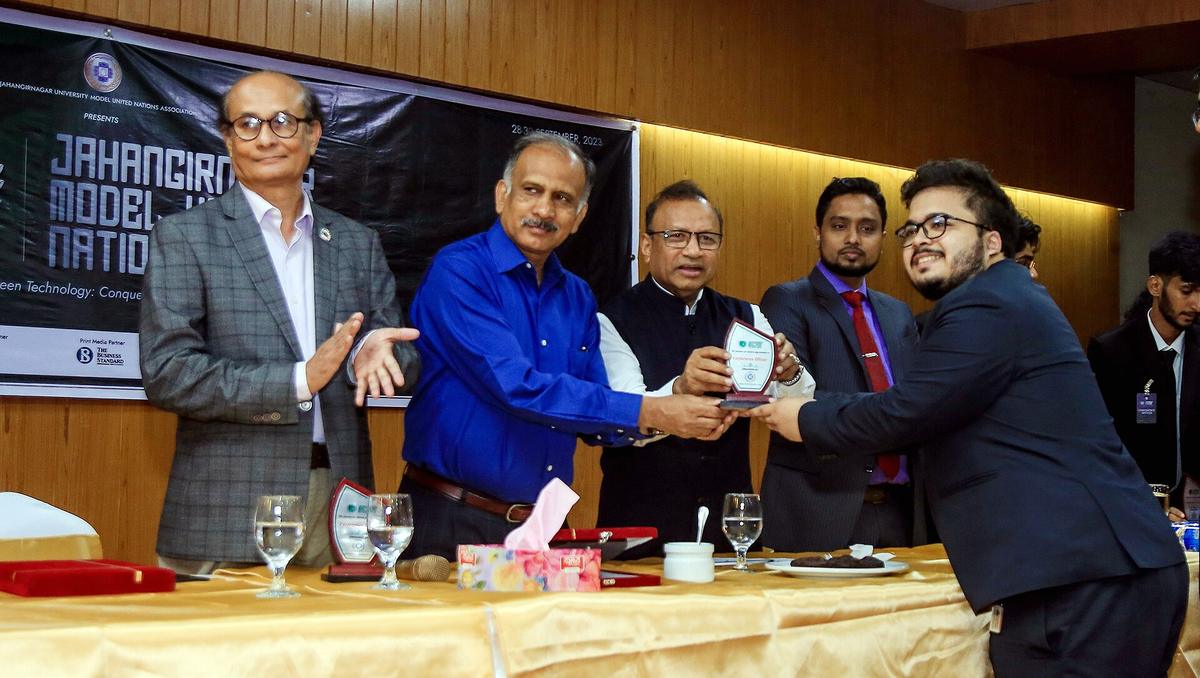
.jpg)
School Trip Safeguarding MUN: What to Carry and What to Ask
Documents to Pack
The paperwork a trip leader carries determines whether a safeguarding incident becomes a legal problem or a managed situation. The minimum set: signed consent forms from each student's parent or guardian, medical and allergy disclosure forms for every student, proof of travel and medical insurance covering the entire conference duration, emergency contact information for each student's family, and a signed code of conduct from every student and chaperone. THIMUN Foundation requires delegation leaders to sign acceptance of the THIMUN Safeguarding Policy before registration. HMUN requires a signed code of conduct for all students and staff before badge collection. NHSMUN and NMUN both require the same. Carry printed copies of every signed document. A phone that loses charge or signal is not a filing system.
Six Questions to Ask Before Registering
Ask the conference secretariat these six questions in writing and keep the answers. First: what is the venue's safeguarding policy for minors, and is the venue staff trained in child safeguarding under host country law? Second: what is the conference's reporting procedure for a safeguarding concern, and who is the on-site conduct officer or ombudsperson named in the conference handbook? Third: what is the alcohol policy for under-18 delegates, and is it zero tolerance with immediate expulsion? Fourth: what is the room-sharing rule? Confirm that no adult shares a room with a single student and that students room only with students. Fifth: what is the photography consent policy, and is an opt-in media release form required for under-18 delegates? Sixth: what insurance does the conference carry for delegate injury or incident, and does it cover delegates in the host country's jurisdiction?
The host country's jurisdiction governs every legal claim. A conference held in the United States operates under US state law for child safeguarding, data protection, and liability. A conference in the Netherlands operates under Dutch law. A conference in India operates under Indian law. A conference's code of conduct does not override local statute. It cannot. The jurisdiction question is the one most trip leaders skip, and it is the one that determines what happens if a visa issue, a data breach, or a safeguarding incident reaches a court.
| Conference | Adult to Delegate Ratio | Minimum Chaperone Age | Delegate Age Range | Safeguarding Policy Year |
|---|---|---|---|---|
| THIMUN (The Hague) | 1:10 | Not specified in published policy | 14+ by first day | 2023 |
| HMUN (Boston) | 1:10 | 21 years | 13 19 years | 2024 |
| NHSMUN (New York) | 1:8 | 21 years | 14 19 years | 2024 |
| NMUN (New York) | Faculty advisor present at all sessions | Not applicable (university level) | 18+ years | 2024 |
| RomeMUN (Rome) | 1:10 for high school delegations | Not specified in published policy | 16+ years | Not published |
| LIMUN (London) | No delegation requirement | Not applicable | 16+ years | Not published |
| PIMUN (Paris) | No delegation requirement | Not applicable | 16+ years | Not published |
MUN Code of Conduct Enforcement: the Gap Between Policy and Practice
Every major MUN conference publishes a code of conduct. THIMUN, HMUN, NHSMUN, and NMUN all require signed acceptance before a student receives their badge. The policies cover harassment, discrimination, alcohol, drugs, curfew, room sharing, and general behaviour. The gap is enforcement during periods when the dais is not watching.
Unmoderated Caucus
Unmoderated caucus is the structural weak point. During a formal speakers' list or a moderated caucus, the dais controls the room. During unmoderated caucus, students move around the committee room, form blocs, negotiate, and leave the room to work in corridors or lobbies. The dais is present but not actively supervising every conversation. A committee running 60% unmoderated caucus, which is common in Harvard-style procedure conferences like HMUN and NAIMUN, creates more unsupervised time than a committee running 20% unmoderated caucus. Check the conference schedule. Ask the secretariat what supervision is provided during unmoderated caucus. The answer is usually that the dais remains in the room, but the dais consists of undergraduate volunteers who have received a few weeks of training and are focused on document management, not safeguarding.
Evening Social Events
Evening social events are the second structural weak point. Conferences schedule mixers, cultural nights, and informal gatherings. The code of conduct applies, but enforcement relies on chaperones, conference staff, and hotel security. A delegation of 30 students with three chaperones at a social event in a hotel ballroom is a ratio of 1:10 on paper but functionally unenforceable. The standard alcohol policy for under-18 delegates is zero tolerance with immediate expulsion. The standard curfew sits between 22:00 and 23:00. The failure mode: students test both boundaries, and a chaperone who is grading papers or sleeping off jet lag may not notice until the next morning.
THIMUN Foundation's safeguarding policy, published in 2023, requires delegation leaders to confirm they will enforce the code of conduct. HMUN's policy, revised in 2024, names a reporting procedure. NHSMUN's code of conduct, revised in 2024, specifies a zero-tolerance alcohol policy. These documents are available on each conference's website. Print the relevant sections and review them with students and chaperones before departure. The policy is only as strong as the person who enforces it. At a conference with 2,000 students, that person is the trip leader, not the secretariat.
International MUN Travel Safety: Visas, Insurance, and Jurisdiction
Visas
International MUN travel safety begins with the visa application, not the flight booking. A delegation traveling to a country that requires a visa must submit applications early enough to absorb delays, denials, and document requests. Verify that each student's passport is valid for at least six months beyond the travel dates. Confirm that visa applications are submitted to the correct embassy or consulate, and that supporting documents include a letter from the conference secretariat confirming registration and purpose of travel. THIMUN in The Hague requires delegates from outside the Schengen area to apply for a short-stay visa. HMUN in Boston requires delegates from countries on the US visa waiver programme to obtain ESTA authorization. A visa denial is not a conference problem. It is a delegation problem, and the school is responsible for the cost and logistics of cancellation.
Insurance and Medical Forms
Insurance is not optional. Every conference requires proof of travel and medical insurance covering the entire conference duration. The policy must cover medical evacuation, repatriation, and emergency treatment in the host country. Check whether the school's existing travel insurance covers MUN activities or whether a supplemental policy is needed. Collect medical information forms from every student before departure, including allergy disclosures, prescription medications, and emergency contacts. Carry these forms in print and digital copies. Share relevant medical information with the conference secretariat if the conference requests it.
Data Protection and Photography Consent
Data protection is governed by the host country's laws. A conference in the European Union must comply with GDPR. A conference in the United States operates under state privacy laws. Ask the secretariat what data they collect from students, how it is stored, and whether it is shared with third parties. The THIMUN Foundation's safeguarding policy includes data protection provisions. HMUN's registration system collects personal information. Confirm that the conference does not share student data with sponsors or external organisations without explicit consent. Photography consent is a separate issue. The standard is an opt-in media release form for under-18 delegates. Confirm that no student is photographed or filmed without signed consent, and that any student who opts out is identifiable by badge or wristband.
The Single Thing That Most Often Goes Wrong
The failure that trip leaders report most consistently is not a major incident. It is the invisible student during the evening hours. A student who attends every committee session, speaks when called on, and submits a position paper may be present in body but absent from supervision after the gavel falls. That student may be in a hotel room without a chaperone checking in, in a lobby with no adult present, or in a social space where the code of conduct is unenforced. The trip leader who assumes that a published policy and a signed form are enough is the trip leader who discovers a problem the next morning. The honest caveat: a conference with 2,000 students and a 1:10 ratio cannot supervise every student every hour. That responsibility belongs to the trip leader. Plan for it before you register, or plan to explain to a parent why you did not.
Common Questions
What is the minimum adult to delegate ratio for an overnight MUN conference?
UK non-statutory guidance sets 1:8 for under-18s. THIMUN requires 1:10. HMUN requires 1:10. NHSMUN requires 1:8. RomeMUN requires 1:10 for high school delegations. Confirm the ratio required by the specific conference and the school's own policy, and enforce that ratio during all hours, not only during committee sessions.
What safeguarding training do chaperones need before an international MUN trip?
UK statutory guidance requires Level 1 safeguarding training refreshed every three years, and at least one Designated Safeguarding Lead contactable 24/7 during the trip. US school employees require state-level background checks. International volunteers need an equivalent police check from their country of residence. Verify that every chaperone has completed training before departure.
What documents must a faculty advisor carry for an international MUN conference?
Signed consent forms, medical and allergy disclosure forms for each student, proof of travel and medical insurance, emergency contact information for each student's family, signed codes of conduct from each student and chaperone, and confirmation of the conference's safeguarding policy. Printed copies of every signed document are essential.
How does a faculty advisor enforce the code of conduct during unmoderated caucus?
Do not rely on the dais to enforce the code during unmoderated caucus. The dais is focused on document management and procedure. Rotate through the committee room, check corridors and lobbies where students may have moved, and maintain a visible presence. Assign a chaperone to each committee. That is the most effective structure.
What is the standard curfew for under 18 delegates at MUN conferences?
The standard curfew is between 22:00 and 23:00 local time. Confirm the curfew with the secretariat, enforce it strictly, and conduct a room check or headcount at curfew. Students who violate curfew should face consequences specified in the code of conduct, which may include expulsion from the conference.
What is the alcohol policy for under 18 delegates at MUN conferences?
Zero tolerance with immediate expulsion is the standard policy for under-18 delegates at all major conferences. The policy applies during committee sessions, official events, and all conference-related activities. Brief students on this policy before departure and enforce it consistently.
What questions should a faculty advisor ask the conference secretariat about jurisdiction and liability?
Ask: what is the venue's safeguarding policy under host country law? Who is the on-site conduct officer or ombudsperson? What insurance does the conference carry for delegate injury or incident? Does the conference's insurance cover delegates in the host country's jurisdiction? What is the reporting procedure for a safeguarding concern? Keep the answers in writing.
Read next
-
 How to Identify MUN Rules of Procedure: THIMUN vs Harvard-Style
A side-by-side guide to identifying whether a conference runs THIMUN or Harvard-style procedure, with a diagnostic question any delegate can apply.
How to Identify MUN Rules of Procedure: THIMUN vs Harvard-Style
A side-by-side guide to identifying whether a conference runs THIMUN or Harvard-style procedure, with a diagnostic question any delegate can apply.
-
 THIMUN The Hague
How THIMUN The Hague works: the definitive THIMUN procedure conference with delegation-only registration and consensus-driven resolution-building.
THIMUN The Hague
How THIMUN The Hague works: the definitive THIMUN procedure conference with delegation-only registration and consensus-driven resolution-building.
-
 London International Model United Nations
LIMUN accepts individual delegates readily, which changes everything for applicants without a university MUN society. How solo registration shapes the conference.
London International Model United Nations
LIMUN accepts individual delegates readily, which changes everything for applicants without a university MUN society. How solo registration shapes the conference.
-
 Berlin Model United Nations
BERMUN is a THIMUN-affiliated school-level conference in Berlin where procedure is driven by formal speakers' lists and lobbying, not moderated caucus.
Berlin Model United Nations
BERMUN is a THIMUN-affiliated school-level conference in Berlin where procedure is driven by formal speakers' lists and lobbying, not moderated caucus.
-
 Harvard Model United Nations
What a delegation needs before applying to HMUN: Harvard procedure, competitive awards, and the moderated caucus system explained.
Harvard Model United Nations
What a delegation needs before applying to HMUN: Harvard procedure, competitive awards, and the moderated caucus system explained.
-
 National Model United Nations
What NMUN's sessions at UN Headquarters in New York actually mean for a delegate—and what they do not. The university-level pedagogical conference explained.
National Model United Nations
What NMUN's sessions at UN Headquarters in New York actually mean for a delegate—and what they do not. The university-level pedagogical conference explained.
-
 WorldMUN
's rotating host city makes it the most internationally mixed university conference and the most expensive to attend. What the rotation means for delegates.
WorldMUN
WorldMUN's rotating host city makes it the most internationally mixed university conference and the most expensive to attend. What the rotation means for delegates.
-
 HMUN vs HNMUN: The Difference Between Harvard's Two MUN Conferences
HMUN is Harvard's high school MUN conference in Boston; HNMUN is its university-level counterpart. Applying to the wrong one wastes an application cycle.
HMUN vs HNMUN: The Difference Between Harvard's Two MUN Conferences
HMUN is Harvard's high school MUN conference in Boston; HNMUN is its university-level counterpart. Applying to the wrong one wastes an application cycle.
-
 LIMUN vs OxIMUN: Comparing the UK's Two Largest University MUN Conferences
LIMUN and OxIMUN are the UK's two largest university MUN conferences. The practical difference is the admission route for a delegate without a society.
LIMUN vs OxIMUN: Comparing the UK's Two Largest University MUN Conferences
LIMUN and OxIMUN are the UK's two largest university MUN conferences. The practical difference is the admission route for a delegate without a society.