Representing a Country in the MUN Human Rights Council When Its Human Rights Record Is Under Scrutiny
How to represent a country whose human rights record is the agenda item—using procedural framing and coalition tactics drawn from real UNHRC behaviour.
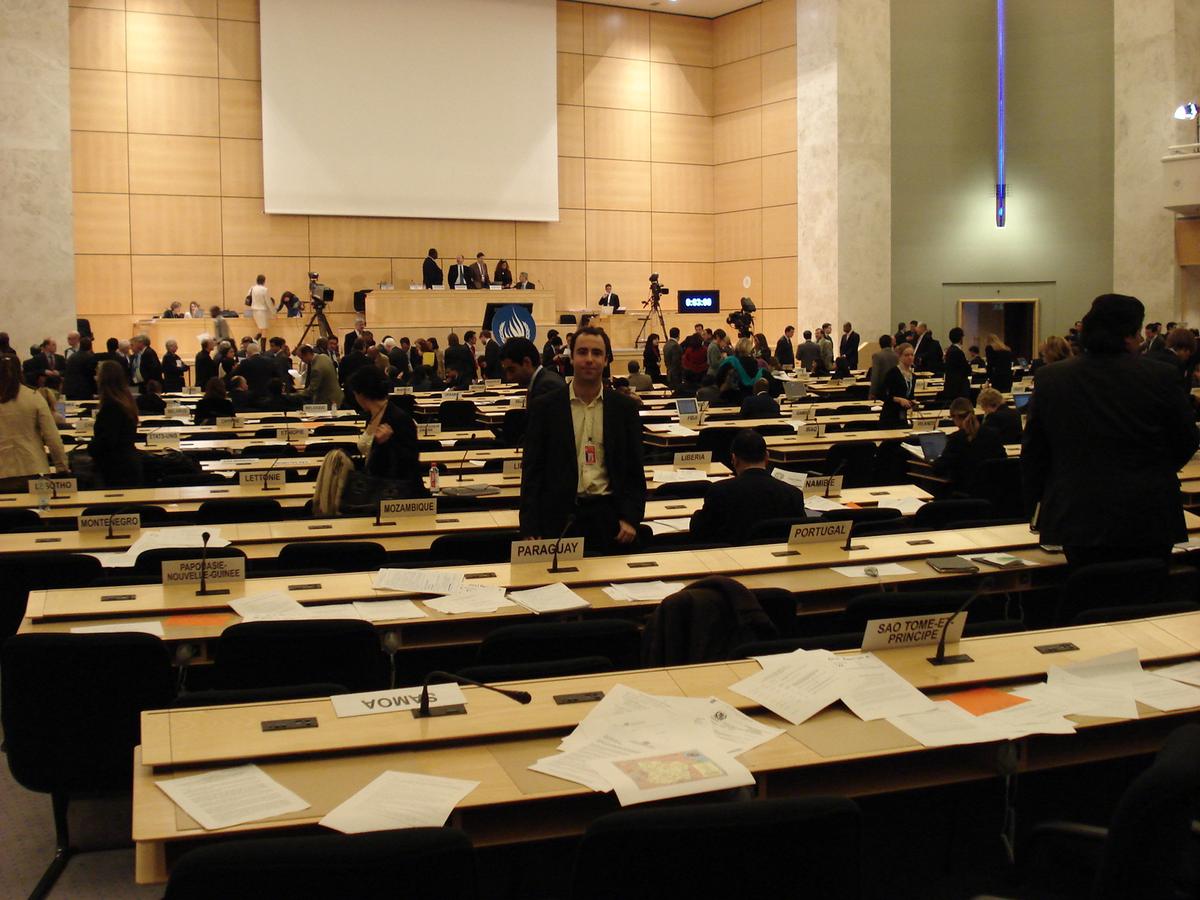

Representing a Country in the MUN Human Rights Council When Its Human Rights Record is Under Scrutiny
Your assigned nation has a documented record of human rights violations, and the committee agenda is specifically about that record. You cannot apologise for your country and remain in role, and you cannot deny documented facts without losing credibility with the dais. This UNHRC committee guide teaches the tactical middle path: procedural objections, alternative framing, coalition-building with non-aligned states, and sovereign-rights language drawn directly from how states behave in the real Council. You are not a human rights advocate; you are a diplomat whose job is to protect your nation's stance while steering the committee toward an outcome that reflects your interests.
UNHRC MUN Committee Strategy: the Middle Path Between Apology and Denial
Why The Middle Path Works
The first mistake new delegates make is treating the UNHRC like a debate club where the side with the stronger moral argument wins. In Model United Nations, the committee rewards coalition-building and procedural control, not being correct on international law. A delegate who stands up and admits their country violates human rights has broken role and cannot win an award. A delegate who insists that documented abuses from an OHCHR report or a special rapporteur's findings did not happen loses credibility with the dais and becomes an unreliable negotiation partner.
The middle path uses three tactics. First, challenge the procedural basis of the discussion. Real states at the Human Rights Council regularly question the mandate of a special rapporteur or the methodology of a treaty body report before addressing its substance. Second, reframe the issue using cultural relativism and non-interference language. You do not defend the abuse; you defend your nation's sovereign right to address its own human rights challenges through its own legal and cultural frameworks. Third, redirect focus to the human rights records of the accusers. The Universal Periodic Review process allows every state to make recommendations to every other state, and the most effective defence is a coordinated counterattack from your bloc.
Enter With A Plan
The failure case is the delegate who spends the first two sessions on the defensive, answering each accusation individually, and ends up outside every resolution-writing bloc. By the time unmoderated caucus begins, that delegate has no allies and no bargaining power. The solution is to enter the committee with pre-written procedural motions and a list of five delegations in your regional bloc that you will contact before the first moderated caucus.
Model UN Human Rights Council Delegate Guide: the Position Paper as Your First Defence
Your position paper is not a confessional. It is a strategic document that establishes your nation's official stance before the committee begins. The standard format has four sections: topic background, past international action, your country's policy, and proposed solutions. For a nation under scrutiny, the policy section is the most important. Write it using the language your country actually uses at the UNHRC. If your assigned nation is China, you emphasise sovereignty and non-interference. If it is Saudi Arabia, you reference cultural and religious contexts in the administration of justice. If it is Russia, you argue that Western states weaponise human rights discourse for geopolitical advantage.
The position paper is submitted before the conference and is often the first document the dais reads about your delegation. A paper that acknowledges international criticism but frames it as misplaced or politically motivated signals to the dais that you understand your role. A paper that lists every violation your country has committed and expresses regret is a disqualifier for awards because it demonstrates role abandonment. Award criteria at large conferences include adherence to country policy as a stated or implicit requirement. The dais cannot give a gavel to a delegate who did not represent their country.
Draft your position paper around a single framing sentence: "[Your country] acknowledges the international community's concerns and reaffirms its commitment to human rights within its own national context and legal framework." That sentence is the line you hold for the entire committee session. Every speech, every amendment, every negotiation returns to it.
MUN UNHRC Country Representation Challenges: the Three Moments That Break Delegates
The Opening Speech
Challenge one is the opening speech. The speakers' list is the first time the committee hears your stance. Do not react to the previous speaker's accusations. Deliver your prepared statement: your nation's commitment to international cooperation, its participation in the Universal Periodic Review, its ongoing domestic reforms. Do not mention specific allegations unless your research shows a denial is defensible. The dais is listening for role-play consistency, not apologetic sincerity.
The Moderated Caucus
Challenge two is the moderated caucus. A delegate from a state with a strong human rights record will call on you directly with a question about a specific case. You have three options. Option one: decline to answer on the grounds that the question refers to matters under domestic legal process. This is a standard sovereign position used by real states. Option two: answer by redirecting to the broader context, such as political instability or external interference that has affected your nation's capacity. Option three: counter-accuse, if your research supports it. The third option requires a bloc of states that will support your counter-narrative during the same caucus. A solo counter-accusation without backup leaves you isolated.
The Draft Resolution
Challenge three is the draft resolution. Your country's name will appear in preambulatory clauses that "note with concern" or "deplore" your government's actions. Your goal is not to remove every reference to your country. That is impossible in a committee of 80 members where your bloc holds 15 seats. Your goal is to shift the operative clauses away from naming-and-shaming and toward capacity-building language. Replace "condemns" with "calls upon" and "demands" with "recommends". These are not cosmetic changes. They change the enforcement mechanism from punitive to cooperative, which is the difference between a resolution that your country can co-sponsor and one you must oppose.
Human Rights Council MUN Position Paper Approach: Writing from the Sovereign Perspective
The position paper is the only document you control entirely. No other delegate edits it. No caucus compromises it. Write it to serve three purposes. First, it must demonstrate research depth. Cite specific OHCHR reports or Universal Periodic Review recommendations, but frame them as evidence of your nation's willingness to engage with international mechanisms, not as proof of violations. Second, it must name your nation's allies within your regional bloc. The African States and Asia-Pacific States blocs hold 26 of the 47 UNHRC seats in the real body, and your position paper should reference shared positions with those states. Third, it must propose solutions that do not require your nation to admit fault. Capacity-building initiatives, technical assistance from the OHCHR, and bilateral cooperation agreements are safe proposals that allow you to appear constructive without conceding the premise.
The failure case here is the delegate who writes a position paper that the dais must reject for inaccuracy or role-breaking. A paper that claims your country has no human rights issues at all will be dismissed as fantasy. A paper that catalogs every documented violation and apologises for them will disqualify you from awards. The target is a paper that the dais reads and thinks: this delegate understands their country's official line and can defend it. That is the paper that keeps you in contention for an award regardless of what happens in committee.
The Bloc Strategy for Delegates Under Fire
Find Your Natural Allies
Building a bloc is the single most important tactical action you take in a Harvard-procedure UNHRC committee. You cannot pass a draft resolution without a bloc, and you cannot defend your nation without a bloc that votes with you on procedural motions. The natural allies for a country under scrutiny are other states that share your regional bloc in the real UNHRC seat allocation. If your nation is from the Asia-Pacific group, your first unmoderated caucus conversations should be with the other 12 Asia-Pacific delegations. Do not go to the Western European and Others Group first. They are the ones likely to sponsor the resolution against you.
Trade Co-Sponsorship For Protection
Inside your bloc, you trade co-sponsorship for protection. You support their clauses on indigenous rights or climate change in exchange for their support on amendments that soften language directed at your country. This is standard UNHRC practice. Session records show that states routinely vote in blocs based on regional solidarity, not on the merits of individual resolutions. A delegate who understands this and works the bloc before the first formal debate ends will have 15 to 20 votes locked in before the accusing delegations have written their first working paper.
The failure case is the delegate who waits to be recruited into a bloc. If you are a country with a poor human rights record, no bloc will recruit you unless you bring something they need. What you bring is your regional bloc's votes and your willingness to co-sponsor their clauses. Offer that before you are asked. By the end of the first unmoderated caucus, you should have a signed working paper with your bloc's lead sponsor and your name on it as a co-sponsor. That paper is your insurance policy. Even if the committee passes a resolution that criticises your country, your name on a competing resolution that the committee also passes shows the dais that you were an active, effective delegate who built coalitions.
Procedural Motions as Defensive Tools in a THIMUN-Procedure UNHRC
Amendments As Your Primary Weapon
In THIMUN-procedure committees, where there is no moderated caucus and debate runs through formal speakers' lists and amendments, your defensive options are different but equally powerful. The key tool is the amendment. When a draft resolution targeting your country is introduced, you submit amendments that change the tone of preambulatory clauses from condemnation to observation. You submit amendments that replace operative clauses that demand action with clauses that recommend cooperation. Each amendment forces a vote. Each vote costs the accusing bloc time and political capital.
Motion To Adjourn Debate
Your second tool is the motion to adjourn debate. If a resolution is progressing toward a vote and you do not have the votes to defeat it, motion to table it. The motion requires a second and a simple majority. In THIMUN procedure, this stops debate on that resolution until the committee votes to take it off the table. If you have 24 votes in a 47-member committee, you can indefinitely delay a resolution you cannot defeat. Real UNHRC session records show that states under scrutiny use procedural motions to stall resolutions they cannot block on substance. The dais expects this behaviour. It is role-play-consistent and it keeps you in the game.
What Dais Visibility Actually Requires for a Delegate Under Scrutiny
The dais evaluates your performance on three things: your adherence to your country's policy, your contribution to the committee's output, and your professional conduct. A delegate who defends a difficult stance with composure and procedural skill is more visible to the dais than a delegate who gives an emotional speech about a morally easy position. The dais at large conferences has seen every possible version of the apologetic delegate. They do not award that delegate. They award the delegate who maintains role under pressure and still gets results.
Visibility comes from speaking at key moments, not from speaking often. Your three most important speaking opportunities are your opening statement, the first moderated caucus after a draft resolution is introduced, and the closing remarks. At each of these moments, deliver a prepared line that reinforces your sovereign stance. Do not improvise. Do not react to the last speaker. Your prepared line is your anchor. The dais notes which delegates are reacting and which delegates are driving. You want to be in the second category.
The Universal Periodic Review as a Tactical Reference Point in Committee
The Universal Periodic Review (UPR) is your best in-committee resource because it is a mechanism your country has already engaged with. Every UN member state undergoes a UPR review every 4.5 years. Your nation has received recommendations from other states and has accepted some of them. In committee, you reference the UPR process as evidence of your nation's constructive engagement with the Human Rights Council. You do not need to mention which recommendations you rejected. The fact that you participated in the review at all is your defence: your country is already in dialogue with the international community through established mechanisms, and the current committee resolution is therefore redundant or premature.
This argument works because it is factually true for every UN member state. The OHCHR maintains the UPR documentation for every country. If your research includes the recommendations your nation accepted during its last UPR cycle, you can point to specific commitments you are implementing. That positions you as a state in progress, not a state in violation. It is the same argument real states make in the UNHRC, and it is recorded in session transcripts.
When the Country is a Real-World Human Rights Abuser: Three Real UNHRC Session Examples
Session records from the UNHRC show three recurring defensive patterns used by states with documented human rights records. First, the procedural objection: a state challenges the mandate of a special rapporteur or the methodology of a report before addressing its substance. This buys time and shifts the burden of proof to the accuser. Second, the sovereign rights argument: a state emphasises its right to determine its own legal and cultural approaches to human rights, citing the UN Charter's non-interference clause. Third, the counter-accusation: a state draws attention to human rights issues in the accusing states, often through coordinated statements from allied delegations.
These patterns are not theoretical. They appear in UNHRC session transcripts from debates on the human rights situations in Syria, Myanmar, and Eritrea between 2018 and 2024. A delegate who uses these patterns in a MUN UNHRC committee is not inventing a defence. They are replicating real diplomatic behaviour. The dais recognises this as accurate role-play, which is the standard by which your performance is judged.
What Not to Do, Based on Recorded Delegate Failures
Do Not Argue The Facts
The most common failure mode is the delegate who treats the committee as a place to argue about facts. You cannot argue that documented abuses did not happen when the OHCHR report is on the dais's table. The dais will not rule on the truth of the report, but they will note that your argument is factually unsupportable and that you are damaging your credibility with other delegates who have read the same study guide.
Do Not Isolate Yourself
The second most common failure is the delegate who isolates themselves. A country under scrutiny that does not join a bloc by the end of the first session will be the subject of a resolution they had no hand in drafting, and the dais will see that they were ineffectual.
Do Not Break Role
The third failure is the delegate who breaks role to win approval. Saying "I know my country has problems" may earn you nods from other delegates, but it disqualifies you from awards because you have abandoned your assigned stance. The dais is evaluating your ability to represent a country, not your personal morality. The award goes to the delegate who plays the game within its rules, not the delegate who seeks validation from the room.
| Situation | Tactic | Expected Outcome |
|---|---|---|
| Opening speakers' list | Deliver prepared statement; no reaction to previous speaker | Dais registers role-play consistency; no defensive posture |
| Moderated caucus question on specific abuse | Respond with sovereign rights language; redirect to UPR | Accuser gets no admission; committee sees procedural control |
| Draft resolution targeting your country | Submit amendments softening operative clauses | Votes on amendments delay resolution; bloc cohesion tested |
| Resolution heading to a vote you will lose | Motion to table or adjourn debate | Resolution delayed; time to rebuild bloc or merge papers |
| Delegate from accusing state calls you out | Point of Order on relevance; one-sentence redirect | Dais rules; you do not engage in direct substantive debate |
| Bloc formation in unmoderated caucus | Join regional bloc; offer co-sponsorship for protection | 15 to 20 votes locked; name on a working paper before accused |
| Final resolution contains criticism of your country | Ensure a competing resolution you co-sponsored also passes | Dais sees coalition-building; two resolutions show engagement |
The One Thing That Most Often Goes Wrong and How to Prevent it
The single most common failure for a delegate representing a country under scrutiny is entering the first unmoderated caucus without a plan. Every other delegate in that room is forming blocs based on policy alignment. You cannot afford to wait to be approached. The first unmoderated caucus is where blocs are born, and a delegate who spends it standing alone or talking to one person is a delegate who will spend the rest of the weekend playing defence. Walk into the room with a list of five delegations from your regional bloc. Find them in the first five minutes. That is the single action that determines whether you spend the weekend as a target or as a coalition member.
If you do nothing else from this guide, do that. The difference between a delegate who wins an award and a delegate who is invisible is the first unmoderated caucus, and the first unmoderated caucus is decided before the committee starts.
Common Questions
How do I respond if another delegate directly asks me about a specific human rights violation in my country?
Do not confirm or deny the specific allegation. Say that your country addresses all matters through its own legal processes and that the question falls under domestic jurisdiction. Then redirect to your prepared line about your nation's constructive engagement with the Universal Periodic Review.
Can I co-sponsor a resolution that criticises my country if I amend it first?
Yes, but only if your amendments meaningfully change the operative clauses. Co-sponsoring a resolution that still contains condemnatory language against your country after your amendments have failed will be seen by the dais as abandoning your stance. Only co-sponsor if the final text aligns with your country's stated policy.
What if my country is not a UNHRC member state in the real committee simulation?
That does not matter for MUN purposes. The simulation treats all assigned states as members of the committee with voting rights. Your role and defensive strategy remain identical. The dais will not penalise you for a country that is not a real UNHRC member.
How do I handle a delegate who keeps calling on me during moderated caucus to attack my record?
Use a Point of Order to object that the delegate's question is not relevant to the sub-topic of the caucus. If the dais overrules you, answer with a one-sentence redirect and sit down. Do not engage in a back-and-forth. You cannot win a direct exchange on the substance of the accusations.
Read next
-
 THIMUN Procedure vs Harvard Parliamentary Procedure: What a Delegate Does Differently
A delegate-facing comparison of THIMUN and Harvard parliamentary procedure, covering speaking, document-building, and coalition-forming differences.
THIMUN Procedure vs Harvard Parliamentary Procedure: What a Delegate Does Differently
A delegate-facing comparison of THIMUN and Harvard parliamentary procedure, covering speaking, document-building, and coalition-forming differences.
-
 HMUN vs HNMUN: The Difference Between Harvard's Two MUN Conferences
HMUN is Harvard's high school MUN conference in Boston; HNMUN is its university-level counterpart. Applying to the wrong one wastes an application cycle.
HMUN vs HNMUN: The Difference Between Harvard's Two MUN Conferences
HMUN is Harvard's high school MUN conference in Boston; HNMUN is its university-level counterpart. Applying to the wrong one wastes an application cycle.
-
 LIMUN vs OxIMUN: Comparing the UK's Two Largest University MUN Conferences
LIMUN and OxIMUN are the UK's two largest university MUN conferences. The practical difference is the admission route for a delegate without a society.
LIMUN vs OxIMUN: Comparing the UK's Two Largest University MUN Conferences
LIMUN and OxIMUN are the UK's two largest university MUN conferences. The practical difference is the admission route for a delegate without a society.
-
 Best MUN Conferences for a First Conference, Ranked on Survivability
MUN conferences ranked on what makes them survivable for a first-time delegate—beginner committees, published rules, and realistic applications—not on prestige.
Best MUN Conferences for a First Conference, Ranked on Survivability
MUN conferences ranked on what makes them survivable for a first-time delegate—beginner committees, published rules, and realistic applications—not on prestige.