How to Choose an MUN Conference Without Relying on Prestige Rankings
How to choose an MUN conference using procedure family, delegate age level, and admission model as filters, not prestige rankings.
.jpg)
The Room You Walk Into
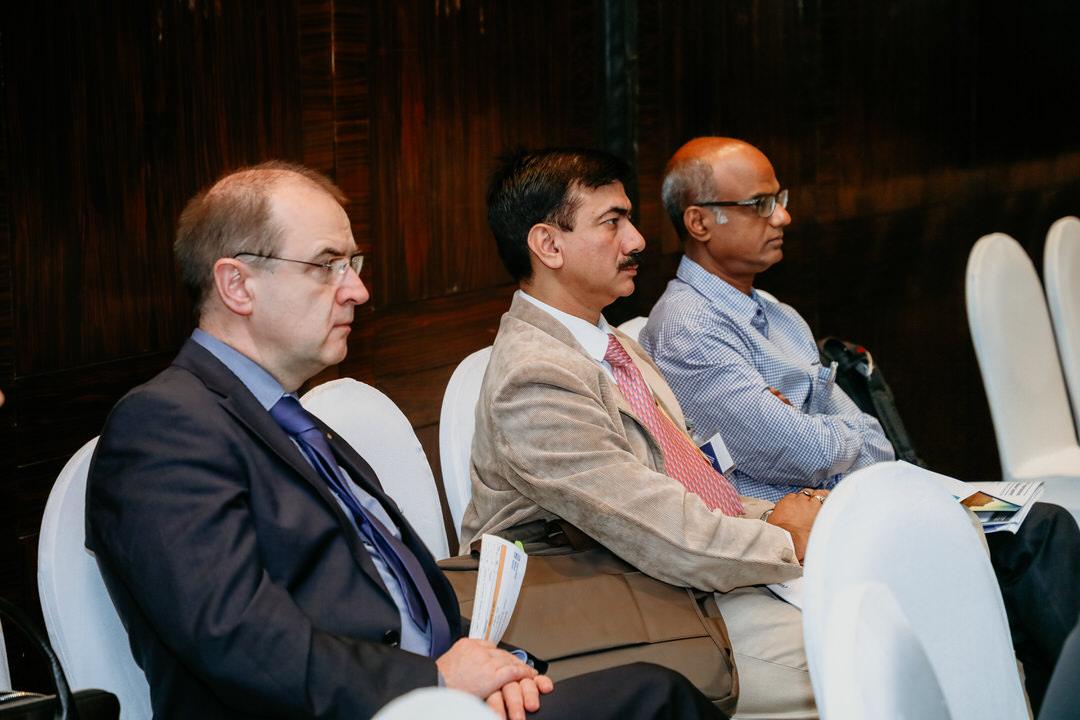
A delegate stands at the back of a hotel ballroom holding a placard. Ninety-nine others are seated in rows. The chair calls on the speakers’ list. A delegate from Argentina delivers a three-minute speech on nuclear non-proliferation. No one responds. The speech is followed by another, then another. No points of information. No moderated caucus. That delegate is in a THIMUN committee. Across the hall, in a Harvard-procedure room, delegates are motioning for a moderated caucus on a specific sub-topic, firing questions at each other, and breaking into unmoderated caucus to write competing resolutions. The two delegates trained in the other procedure would be lost within fifteen minutes. This is why how to choose an MUN conference begins with procedure. Not prestige.
Why Prestige Rankings Are a Trap
Every listicle ranking MUN conferences by prestige uses the same criteria: host university name, delegate count, and rumoured award difficulty. None of these are verifiable. A conference claiming thousands of registered attendees may have a significant no-show rate on the floor. A chair’s biography implies deep topic knowledge. The chair may be an undergraduate with six weeks of training. The gap between published award criteria and actual award drivers is structural: position papers are claimed to be weighted equally, but in practice, dais visibility and bloc leadership dominate. A well-written position paper from a quiet delegate almost never wins. Your first filter is not prestige. It is whether you can function in the room.
MUN Conference Selection Criteria: the Three Primary Filters
Filter One: Procedure Family
The two dominant rules-of-procedure families, THIMUN and Harvard, have not converged in decades. They structure the entire delegate experience differently. In THIMUN procedure, there is no moderated caucus. Debate happens through formal speakers’ lists and amendments to working papers that become draft resolutions. Lobbying replaces unmoderated caucus; delegates move freely to merge working papers into a single resolution per topic. There is no voting on resolutions; consensus is reached by acclamation. In Harvard procedure, delegates can motion for a moderated caucus on a specific sub-topic, request unmoderated caucus to form blocs and write documents, and then submit multiple competing resolutions. Voting is by roll call or placard. A delegate trained in Harvard procedure cannot function in a THIMUN committee without relearning the mechanics, and vice versa. The distinction is simple: if a committee allows a motion for a moderated caucus, it is Harvard-style. Choose the family that matches your training.
Filter Two: Delegate Age Level
A conference that advertises inclusivity may produce committees where a 14-year-old sits next to an 18-year-old. The age gap distorts negotiation dynamics: younger delegates defer, older ones dominate. The major conferences sort by level. HMUN, NAIMUN, YMUN, and MUNUC are secondary school. NMUN is university-level. HMUN India draws a secondary school circuit. THIMUN in The Hague is secondary school. PIMUN and LIMUN are university-level. WIMUN is university-level. A university participant at a secondary school conference will find committees less challenging and awards less meaningful. A secondary school participant at a university conference may be invisible in a 200-person committee with 60% unmoderated caucus share. Pick the level that matches your age group and experience.
Filter Three: Admission Model
A conference requiring school delegation registration excludes the solo delegate entirely. THIMUN admits school delegations only. HMUN, NAIMUN, YMUN, and MUNUC do the same. NMUN and LIMUN accept individual delegates and delegations. If you have no school team, you cannot attend a delegation-only conference. If you are a faculty advisor managing a budget of five students, you cannot send one to a conference that demands a minimum of eight. The admission model determines whether you can attend at all. Check the registration page before you research committee topics. If the conference requires a school delegation and you have none, move on.
THIMUN vs Harvard Procedure Choice: What Changes in the Room
In a THIMUN committee, the chair facilitates consensus. There are no individual awards at the flagship THIMUN conference; some affiliated organisations give delegation awards. The resolution process is incremental: working papers are merged through lobbying until a single document represents the committee. Amendment volume is high because amendments are the primary mechanism of negotiation. Speeches are delivered from the floor without points of information. In a Harvard-style committee, the chair rules on motions and scores participants for awards. Blocs form during unmoderated caucus and write competing draft resolutions. Amendments from the floor are entertained. A resolution that passes with zero amendments may reflect a dais that suppressed dissent. The award hierarchy, Best Delegate, Outstanding Delegate, Honourable Mention, Verbal Commendation, is stable across Harvard-style conferences, but award transparency varies. Some conferences publish rubrics; others keep them black box. If you are optimising for awards, find out whether the rubric is published. If it is not, dais discretion dominates.
MUN Conference Admission Model Comparison: Who Can Enter and Who Cannot
The admission model is the most overlooked filter. Delegation-only registration means your school must form a delegation, appoint a faculty advisor, and register as a group. Individual delegate registration means you can sign up alone. THIMUN, HMUN, NAIMUN, YMUN, and MUNUC are delegation-only. NMUN and LIMUN accept both. WIMUN accepts both. MUNICE accepts both. If you are a solo participant looking for a competitive conference with Harvard procedure and individual registration, target NMUN, LIMUN, or MUNICE. A school delegation of eight to thirty should look at the delegation-only conferences. A faculty advisor with a delegation of three cannot attend a conference requiring a minimum of five. Read the registration requirements before you evaluate committee size or study guide quality. If the door is closed, nothing else matters.
How to Evaluate MUN Conferences: the Secondary Filters
Committee Size and Staff Ratio
Once you have set procedure family, delegate age level, and admission model, apply the secondary filters. Committee size matters: a participant who dominates a 30-person committee may be invisible in a 200-person one. Delegate-to-staff ratio signals potential attention, but a low ratio with inexperienced chairs is worse than a high ratio with skilled ones.
Caucus Share and Position Papers
Unmoderated caucus share changes the activity. A conference that runs 60% unmoderated caucus favours informal negotiators; one that runs 20% favours formal speakers. Position-paper requirement gates award eligibility. If a paper is required but only checked for completion, the quality does not matter.
Bloc Size, Amendments, and Study Guides
Bloc size at resolution submission indicates consolidation: if every resolution has 80% of the room as signatories, the committee avoided hard choices. Amendment volume reveals how contested the drafting process was. Award transparency, committee session length, and study guide quality are the last checks. A study guide that misrepresents the topic sends participants into a debate that never happens. Check whether the conference publishes its study guides before you register.
The Supporting Terms That Distinguish One Conference from Another
The vocabulary of conference evaluation is concrete. Committee size is a number: THIMUN runs 15-25 committees; HMUN runs 25-35. Delegate-to-staff ratio is disclosed by some conferences. Unmoderated caucus share is the percentage of total committee time spent in free movement. Crisis update frequency determines how reactive a crisis committee is. Award tiers dilute meaning: six tiers of commendation signal participation, not distinction. Resolution output per committee is not a measure of quality. A committee that passes three merged papers may have done less substantive work than one that passed a single contested resolution. Working language count matters: a monolingual English conference concentrates the pool; a bilingual conference like PIMUN creates translation bottlenecks. Chair training hours, where disclosed, correlate with better-run committees. Bloc size at resolution submission and amendment volume are signals of committee health. Award transparency, whether rubrics are published, is the single most useful filter for a participant chasing a gavel. If the rubric is black box, the delegate-to-staff ratio and chair training hours become guesses.
What Goes Wrong: Six Failure Modes to Avoid
The Invisible Delegate
The invisible delegate attends every session but never speaks, submits no written work, and is forgotten by the dais. Cause: a committee too large for natural participation.
The Resolution That Passes Unread
The resolution that passes unread is approved because the bloc has a majority, but its clauses are contradictory. Cause: time pressure and dais reluctance to scrutinise bloc leaders’ work.
The Roleplay Free-for-All
The crisis committee that becomes a roleplay free-for-all treats the simulation as a game of eliminating rivals. Cause: dais design that rewards aggression over substance.
Bloc Collapse and Chair Favouritism
Bloc collapse during unmoderated caucus leaves participants without a document to submit. Cause: irreconcilable policy differences or a bloc formed on social affinity. Chair favouritism is visible when one delegate is called on more often and procedural violations are overlooked. Cause: unconscious bias or a dais that confuses assertiveness with competence.
The Stolen Country
The stolen country is a registration error that assigns the same country to two delegations in the same committee. Cause: poor allocation software. Check your country assignment the day you receive it.
The Gap Between Claimed and Real: What Conferences Say vs What They Deliver
Conferences claim to weight position papers, speaking, and resolution contribution equally. In practice, dais visibility and bloc leadership dominate. A well-written position paper from a quiet participant rarely wins. Position papers are claimed to be read and scored; at large conferences, many are skimmed or checked only for completion. Committee topic descriptions in study guides may promise a broad policy debate; the dais may steer the committee toward a crisis or a specific angle they find interesting. The gap is caused by dais autonomy. Diversity of representation claims are undercut by a delegate pool heavily weighted toward private international schools and wealthy urban schools. Chair expertise claims are undermined by undergraduate volunteers who received a few weeks of training. Educational value claims market the activity as teaching about the UN; the activity primarily teaches parliamentary tactics, coalition politics, and performance. The gap between the stated justification and the actual skills practised is structural. Understand this gap and you can navigate it. Believe the marketing and you will be confused.
Who This Subject Suits and Who Should Skip it
Model United Nations suits the participant who wants to build coalitions, steer a room, and learn parliamentary procedure. It suits the faculty advisor who needs to choose conferences based on procedure family and admission model, not prestige. It suits the experienced delegate chasing a gavel who needs award transparency and committee size data. It suits the parent evaluating whether the cost is worth the skills taught. For a major secondary school conference, budget USD 150 to 600 per person. MUN does not suit the reader looking for analysis of actual UN peacekeeping operations or Security Council reform; those belong to academic international relations sources. It does not suit the reader who wants a debate club where one side wins on the merits of an argument; MUN rewards consensus-building, not clash. If you need current geopolitical news, go to a news organisation. If you want competitive debate formats like World Schools or British Parliamentary, look there. MUN is legislative theatre. It is not a correctness contest.
Common Questions
What is the most common mistake when choosing an MUN conference?
Choosing based on host university reputation instead of procedure family. A delegate trained in Harvard procedure who walks into a THIMUN committee will be unable to motion for moderated caucus and will not understand the lobbying-based resolution process.
Can I attend an MUN conference alone if my school doesn't have a team?
Yes, but only at conferences that accept individual delegate registration. NMUN, LIMUN, MUNICE, and WIMUN accept individuals. THIMUN, HMUN, NAIMUN, and YMUN are school delegation only. Check the admission model before you research anything else.
How do I know if a conference's awards are fairly decided?
Look for published award rubrics. If the rubric is public, you can optimise your performance. If it is not published, awards are a black box dominated by dais discretion. Most conferences do not publish rubrics.
What is the difference between a crisis committee and a General Assembly committee?
A General Assembly committee produces formal resolutions on a fixed agenda. A crisis committee produces directives in response to real-time scenario updates. Crisis committees are smaller, faster, and reward improvisation. GA committees reward formal drafting and consensus-building.
Read next
-
 THIMUN Procedure vs Harvard Parliamentary Procedure: What a Delegate Does Differently
A delegate-facing comparison of THIMUN and Harvard parliamentary procedure, covering speaking, document-building, and coalition-forming differences.
THIMUN Procedure vs Harvard Parliamentary Procedure: What a Delegate Does Differently
A delegate-facing comparison of THIMUN and Harvard parliamentary procedure, covering speaking, document-building, and coalition-forming differences.
-
 HMUN vs HNMUN: The Difference Between Harvard's Two MUN Conferences
HMUN is Harvard's high school MUN conference in Boston; HNMUN is its university-level counterpart. Applying to the wrong one wastes an application cycle.
HMUN vs HNMUN: The Difference Between Harvard's Two MUN Conferences
HMUN is Harvard's high school MUN conference in Boston; HNMUN is its university-level counterpart. Applying to the wrong one wastes an application cycle.
-
 LIMUN vs OxIMUN: Comparing the UK's Two Largest University MUN Conferences
LIMUN and OxIMUN are the UK's two largest university MUN conferences. The practical difference is the admission route for a delegate without a society.
LIMUN vs OxIMUN: Comparing the UK's Two Largest University MUN Conferences
LIMUN and OxIMUN are the UK's two largest university MUN conferences. The practical difference is the admission route for a delegate without a society.
-
 Best MUN Conferences for a First Conference, Ranked on Survivability
MUN conferences ranked on what makes them survivable for a first-time delegate—beginner committees, published rules, and realistic applications—not on prestige.
Best MUN Conferences for a First Conference, Ranked on Survivability
MUN conferences ranked on what makes them survivable for a first-time delegate—beginner committees, published rules, and realistic applications—not on prestige.